
This post contains affiliate links. As an Amazon Associate, Arrive Outdoors earns from qualifying purchases, at no extra cost to you.
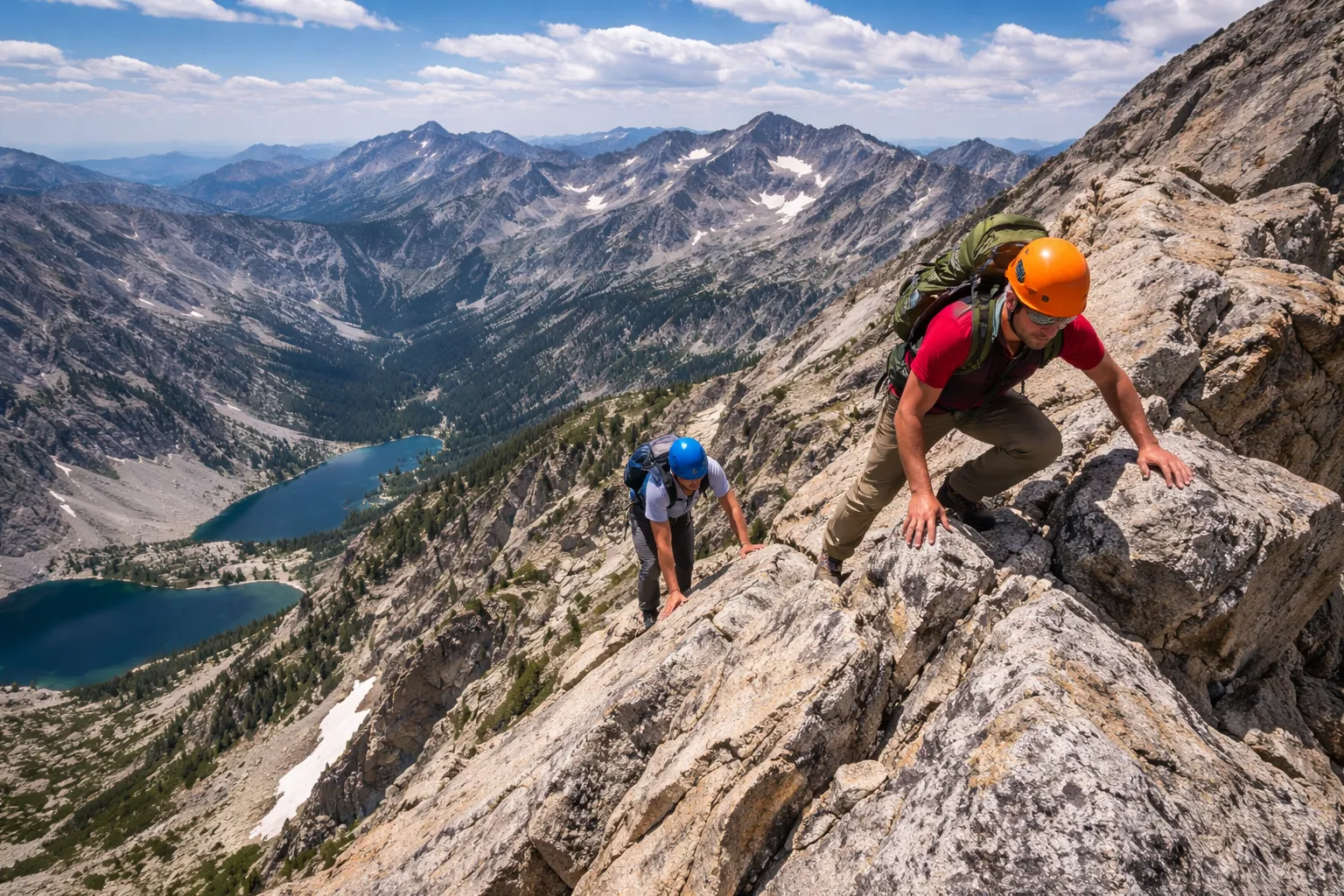
There’s a moment on certain mountains when walking stops feeling sufficient. Your hands come out. Your focus sharpens. The terrain rises sharply and suddenly demands respect. That moment is often where class 3 scrambling begins.
Class 3 scrambling lives in the gray zone between hiking and climbing. It isn’t technical rock climbing. There are no ropes dangling from anchors. But it’s far more serious than a steep trail. Falls can hurt. Exposure is real. And confidence alone won’t save you. This is where movement, judgment, and preparation start to matter in very practical ways.
I’ve always thought of class 3 scrambling as honest terrain. It rewards calm decision-making and punishes rushed thinking. If you’re curious about stepping into this space—or already have and want to do it better—this guide is for you.
Understanding the Yosemite Decimal System (YDS)
Before we go any further, we need a shared language. The Yosemite Decimal System (YDS) is the most common way difficulty is rated for hikes, scrambles, and climbs in North America.
Here’s the simplified breakdown:
| Class | Description |
| Class 1 | Walking on a maintained trail |
| Class 2 | Off-trail hiking, uneven ground, occasional hands |
| Class 3 | Sustained scrambling with hand use and exposure |
| Class 4 | Steep, exposed scrambling where a rope is often used |
| Class 5 | Technical rock climbing |
Class 3 scrambling sits right in the middle of the spectrum. It’s not casual, but it’s not technical climbing either. The risk comes less from difficulty and more from consequence. You’re usually not stuck because the moves are too hard. You’re cautious because a mistake matters.
What Actually Defines Class 3 Scrambling?
Class 3 terrain forces your hands into the equation. Not for balance once or twice. Frequently.
You’ll encounter steep rock, narrow ridges, and sections where three points of contact feel like common sense, not caution. Exposure increases, meaning the drop beside or below you becomes noticeable—and sometimes intimidating.
Typical features of class 3 scrambling include:
- Sustained hand-over-hand movement
- Steep slabs, blocky rock, or ridgelines
- Sections where falling would result in serious injury
- Loose rock in places, especially in gullies
- Minimal or no established trail
A rope is usually unnecessary. But the terrain demands respect. And in certain conditions—snow, ice, fatigue—class 3 can feel much harder than its rating suggests.
Class 2 vs Class 3 vs Class 4: Why the Line Matters
One of the biggest mistakes new scramblers make is assuming ratings are precise. They’re not. They’re contextual.
Class 2 vs Class 3
- Class 2 may use hands occasionally
- Class 3 requires hands regularly
- Exposure increases significantly in Class 3
- A slip in Class 2 is usually survivable; in Class 3, maybe not
Class 3 vs Class 4
- Class 3 focuses on movement and balance
- Class 4 adds steeper angles and higher consequence
- Many climbers choose to rope up on Class 4 terrain
- Falls in Class 4 are often fatal without protection
Here’s the key takeaway: class 3 scrambling feels easy until it doesn’t. That’s why humility matters.
Skills That Matter More Than Strength
This might surprise you. Class 3 scrambling is not about brute strength.
It’s about efficiency.
Strong hikers sometimes struggle because they rush. Experienced scramblers move slower but smoother. They stay balanced. They stay calm. An they keep three points of contact without overthinking it.
Critical skills include:
- Body positioning: keeping your weight over your feet
- Balance: trusting friction, not pulling upward
- Hold assessment: choosing solid rock, avoiding loose blocks
- Route-finding: recognizing the easiest line through complex terrain
- Mental control: staying composed when exposure increases
If you feel rushed or panicked, you’re already making mistakes. Class 3 scrambling rewards patience.
Gear That Makes a Real Difference
You don’t need a full climbing rack. But the right gear matters.
Essential Gear for Class 3 Scrambling
- Footwear: approach shoes or stiff hiking boots with good grip
- Helmet: strongly recommended in loose or crowded terrain
- Navigation: GPS, map, or route description
- Weather protection: wind and rain change everything
- Emergency kit: headlamp, food, water, first aid
Optional but situational:
- Lightweight gloves for grip
- Trekking poles (useful on approach, stow on scramble)
- A short rope for partners with mixed experience
Here’s a simple gear comparison:
| Item | Optional | Recommended | Essential |
| Helmet | ✓ | ||
| Approach Shoes | ✓ | ||
| Rope | ✓ | ||
| Trekking Poles | ✓ | ||
| Navigation | ✓ |
Class 3 scrambling doesn’t forgive poor footwear. That’s non-negotiable.
Managing Risk Without Overthinking It
Risk is unavoidable. Mismanaging it is optional.
The biggest dangers in class 3 terrain are:
- Rockfall
- Slips on steep slabs
- Fatigue late in the day
- Sudden weather shifts
Smart strategies include:
- Climbing one at a time in loose sections
- Testing holds before committing weight
- Turning around when conditions degrade
- Leaving ego behind, especially in groups
One rule I live by: If downclimbing feels scarier than going up, reassess immediately. Many accidents happen on the descent.
Real-World Examples of Class 3 Scrambling
Class 3 scrambling shows up all over the world, often on classic routes.
Popular examples include:
- Colorado 14ers via standard routes
- Sierra Nevada ridgelines
- Alpine scrambles in the European Alps
- UK ridge scrambles in Snowdonia and the Lake District
What makes these routes appealing isn’t difficulty alone. It’s the sense of movement through wild terrain without technical barriers. But popularity also brings crowds—and crowds increase rockfall risk.
Research conditions. Always.
When Class 3 Turns Serious—Fast
Ratings assume dry, stable conditions. Nature doesn’t care.
Snow, ice, rain, or high wind can transform class 3 scrambling into a technical problem instantly. Wet rock kills friction. Snow hides holds. Lightning turns ridges into liabilities.
Situations that demand turning back:
- Early season snow on north-facing slopes
- Afternoon storms building rapidly
- Poor visibility on exposed ridges
- Unexpected fatigue or altitude effects
Turning around is not failure. It’s experience in progress.
How to Train for Class 3 Scrambling
You don’t train for this in a gym alone.
Useful preparation includes:
- Practicing movement on boulders or low rock
- Gaining confidence on Class 2+ terrain
- Learning downclimbing techniques
- Hiking with elevation and exposure
Climbing gyms help with movement awareness, but they don’t teach judgment. Judgment comes from time outside, deliberate pacing, and honest self-assessment.
Who Should—and Shouldn’t—Try Class 3 Scrambling
Class 3 scrambling isn’t elite. But it’s not casual either.
You’re ready if:
- You’re comfortable off-trail
- You stay calm with exposure
- You move deliberately
- You understand when to retreat
You should wait if:
- Heights trigger panic
- You rush when nervous
- You rely solely on fitness
- You avoid preparation
There’s no shame in waiting. Mountains don’t expire.
Final Thoughts: Respect the Middle Ground
Class 3 scrambling sits in a powerful space. It offers adventure without technical barriers. Freedom without recklessness. Movement without machinery.
But it demands honesty.
The terrain won’t save you. The rating won’t protect you. Only preparation, judgment, and humility will. When approached correctly, class 3 scrambling becomes one of the most rewarding ways to move through wild places.
Quietly challenging. Intensely satisfying. And always worth doing right.
FAQs
Class 3 scrambling involves steep terrain where frequent hand use is required and falls can result in serious injury.
A rope is usually not required, but some people carry one for added safety in exposed or unfamiliar sections.
Unlike hiking, class 3 scrambling requires hands for upward movement and includes sustained exposure.
It can be dangerous if conditions are poor or if the scrambler lacks experience, judgment, or proper footwear.
Approach shoes or stiff hiking boots with good grip work best on steep, rocky terrain.
Beginners can try class 3 scrambling if they are comfortable with exposure and start on well-documented routes.
Yes, rain, snow, or ice can significantly increase risk and turn class 3 terrain into a technical challenge.
Helmets are highly recommended in loose or crowded areas to protect against rockfall.
Training includes practicing off-trail movement, building balance, and gaining experience on easier scrambles.
You should turn back if weather worsens, exposure feels overwhelming, or downclimbing appears unsafe.