
This post contains affiliate links. As an Amazon Associate, Arrive Outdoors earns from qualifying purchases, at no extra cost to you.
I’ll say it plainly. Hiking photos are harder than they look.
You’re sweaty. The light changes every five minutes. The trail is uneven. Your pack is crooked. And somehow the mountain looks incredible… while you look stiff, tired, or oddly placed in the frame.
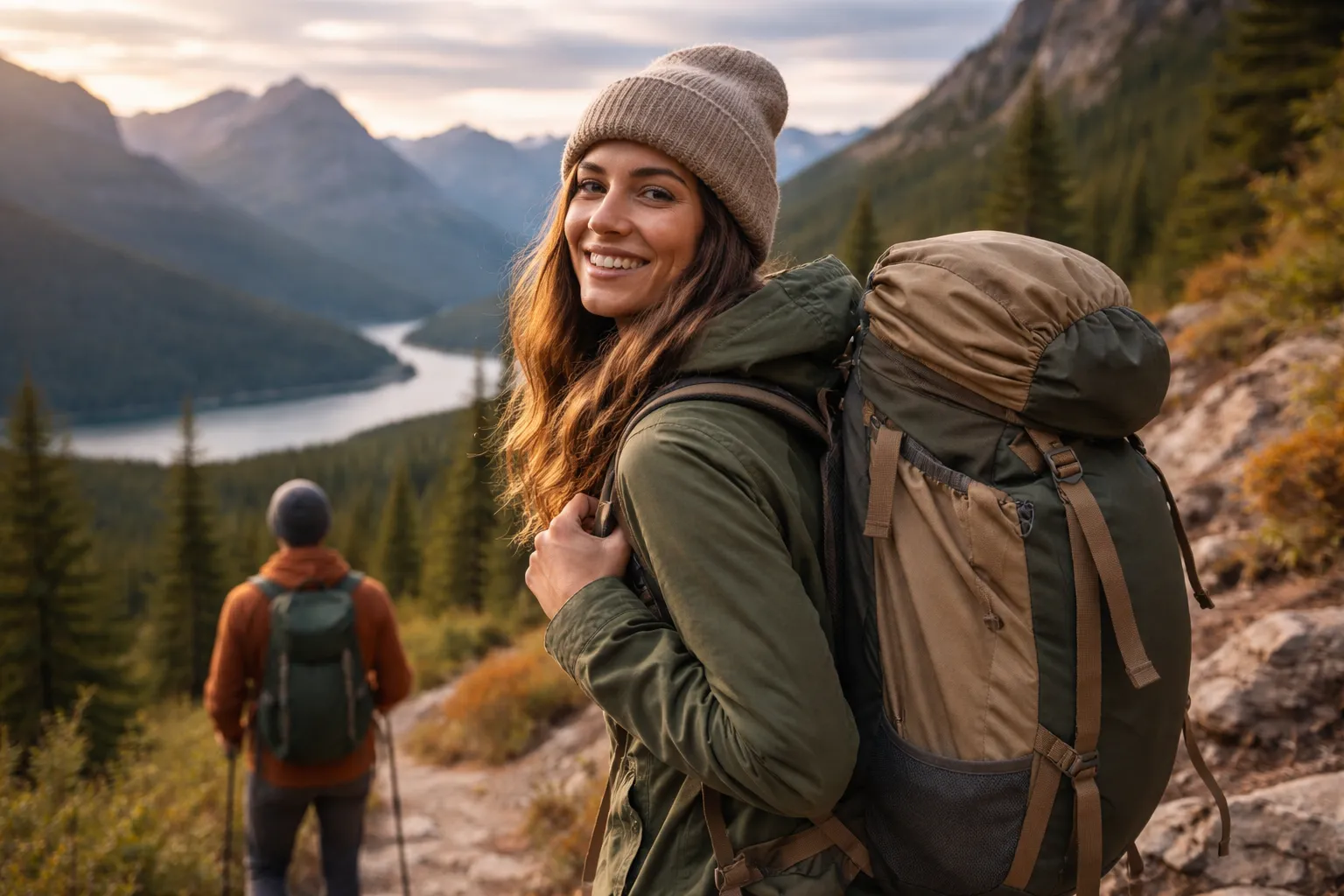
That’s exactly why learning how to look good in hiking pictures matters. Not for vanity. For storytelling. For memory. And for capturing the feeling of being out there, not just proof that you were.
This guide isn’t about posing like a fashion shoot. It’s about looking confident, natural, and grounded in the landscape—without forcing it. I’ve used these techniques myself, and they work whether you’re shooting with a phone, a mirrorless camera, or a friend who’s half paying attention.
Let’s get into it.
Why Hiking Photos Feel So Tricky
Hiking photos strip away control.
No mirrors. No perfect lighting. And no retakes on demand.
That’s why the goal isn’t perfection. It’s presence.
When people ask how to look good in hiking pictures, what they really want is this:
- To look comfortable, not staged
- To fit the environment instead of fighting it
- To capture movement, scale, and emotion
Once you aim for that, everything gets easier.
Choose Clothes That Work With Nature
Your outfit sets the tone long before the camera comes out.
Stick to Colors That Belong Outdoors
Muted, earthy colors photograph beautifully against natural backdrops.
Best options:
- Olive, forest green, tan, rust, navy
- Soft grays and off-whites
- Muted blues and browns
Avoid neon shades and high-contrast patterns. They pull attention away from the scene—and from you.
Fit Beats Fashion Every Time
Baggy gear hides your shape. Ultra-tight gear looks uncomfortable.
Aim for:
- Pants that move but hold structure
- Tops that skim your body without clinging
- Layers that add shape instead of bulk
A lightweight jacket or flannel can instantly improve photos by adding depth and clean lines.
Quick Outfit Checklist
| Element | What Works | What to Skip |
| Colors | Earth tones | Neon, loud prints |
| Fit | Clean and flexible | Oversized or restrictive |
| Layers | Lightweight jackets | Bulky outerwear |
| Logos | Minimal | Large branding |
Simple. Intentional. Functional.
Location Matters More Than You Think
Not all “scenic” spots photograph well.
Crowded overlooks kill the mood. Flat areas lack drama. And random pull-offs rarely tell a story.
Look for Natural Structure
Great hiking photos often include:
- Trails curving into the frame
- Ridgelines leading the eye
- Trees or rocks creating depth
These elements give the image direction.
Elevation Changes Everything
Photos taken slightly uphill or downhill feel more dynamic than flat ground. Even a small rise adds scale.
If you’re wondering how to look good in hiking pictures without overthinking it, start by stepping ten feet higher or lower before the shot. It changes everything.
Pose Like You’re Actually Hiking
Static poses are the fastest way to look awkward.
Movement is your friend.
Walk Instead of Standing Still
A walking shot looks natural because it is.
Walk slowly. Keep your posture tall. Let your arms swing naturally. Don’t look at the camera unless it feels right.
Motion creates honesty.
Interact With the Environment
Some of the best hiking photos come from “in-between” moments:
- Adjusting your backpack straps
- Tying your boot
- Sitting on a rock to take in the view
These actions give your body a purpose, which instantly relaxes your posture.
Hands: The Silent Trouble Spot
If you don’t know what to do with your hands, the photo will show it.
Options that work:
- Rest one hand on a trekking pole
- Hold a strap or jacket edge
- Let your arms move naturally while walking
Avoid stiff arms pinned to your sides. That’s the fastest giveaway of a forced pose.
Facial Expression and Posture: Less Control, More Ease
You don’t need a big smile.
You need relaxation.
Neutral Is Powerful
A soft, neutral expression often looks better than an exaggerated grin. Especially in wide landscape shots.
Look past the camera. Look at the horizon. And look down the trail.
Those moments feel real because they are.
Stand Tall Without Locking Up
Good posture matters, but stiffness kills it.
Think:
- Chest open
- Shoulders relaxed
- Chin level, not lifted
Confidence shows through ease, not tension.
Lighting Will Make or Break the Shot
This part matters more than gear.
Golden Hour Is Worth the Effort
Early morning and late afternoon light is softer, warmer, and more forgiving. It adds depth without harsh shadows.
If you can time your hike for this window, do it.
Midday Light Is Tricky—but Manageable
If midday is your only option:
- Shoot in partial shade
- Position the sun behind you or slightly to the side
- Avoid overhead light directly above your face
Trees, cliffs, and trail bends can act as natural light diffusers.
Camera Angles That Instantly Improve Hiking Photos
Small angle changes create big improvements.
Shoot Slightly Below Eye Level
This adds presence and makes the landscape feel bigger.
Avoid shots taken from above unless intentionally stylized. They flatten the scene and shrink you in it.
Wide Shots vs Close-Ups
Wide shots show scale. Close-ups show emotion.
Use both.
A strong hiking photo set often includes:
- One wide landscape shot
- One mid-range walking shot
- One close detail or expression
That combination tells a complete story.
Gear That Helps You Look Better (Without Trying)
Your gear shows up in every photo. Make it count.
Choose a Clean, Streamlined Backpack
Bulky packs dominate the frame. Adjust straps before photos so the pack sits high and close to your body.
Accessories That Add Character
Hats, sunglasses, and bandanas add personality without distraction—if you keep them simple.
Functional always looks better than decorative.
Clean Boots Matter
Mud happens. But thick layers of dust or caked-on dirt pull attention downward.
A quick wipe before photos helps more than you think.
Group Hiking Photos That Actually Work
Group shots don’t need choreography. They need flow.
Skip the Straight Line
Stagger heights and positions. Let people stand at different distances from the camera.
Coordinate, Don’t Match
Shared color tones look great. Identical outfits don’t.
Earth tones across the group create harmony without uniformity.
Capture Interaction
Walking, talking, laughing—these moments feel alive. And they photograph beautifully.
Editing: Enhance, Don’t Rewrite Reality
Editing should support the photo, not overwhelm it.
Keep Adjustments Light
Focus on:
- Slight brightness correction
- Gentle contrast
- Natural warmth
Heavy filters flatten outdoor colors and make landscapes feel artificial.
Crop With Purpose
Remove distractions at the edges. Strengthen the composition. Keep the story intact.
A small crop can dramatically improve how to look good in hiking pictures without changing the moment itself.
The Real Secret: Comfort Shows
Here’s the truth.
The best hiking photos come from people who stop trying to look good and start enjoying where they are.
Comfort shows in your shoulders. In your face. In the way you move.
When you’re present, the camera picks it up.
Windblown hair. Dusty pants. A flushed face. These details don’t ruin the shot. They make it believable.
And believable always beats perfect.
Final Thoughts: Make the Photo About the Experience
If you remember one thing, let it be this:
Learning how to look good in hiking pictures isn’t about tricks. It’s about alignment. Alignment between you, the trail, and the moment you’re standing in.
Dress simply. Move naturally. Trust the light. Let the environment lead.
The best photos don’t scream for attention.
They quietly say, I was here—and it mattered.
That’s the kind of image worth keeping.
FAQs
Wear well-fitted, neutral or earth-tone clothing that blends naturally with outdoor scenery and avoids loud logos.
Muted greens, browns, blues, and grays photograph best because they complement natural landscapes without overpowering them.
Focus on movement—walk the trail, adjust your pack, or look at the view instead of standing still and posing.
Early morning or late afternoon provides softer, warmer light that flatters both people and landscapes.
Relax your shoulders, keep your posture tall, and give your body something to do, like walking or interacting with the environment.
Looking away often feels more natural, especially in wide shots, while direct eye contact works well for close-ups.
Shooting slightly below eye level adds presence and makes the landscape feel larger and more dramatic.
Yes, functional accessories like hats or trekking poles add character while keeping the look authentic.
Heavy filters and extreme color shifts look unnatural; light adjustments to brightness and warmth work best.
Trying too hard to pose instead of enjoying the hike, which leads to stiff and forced-looking images.