
How to cool a tent without electricity is one of the most important skills for warm-weather campers to master. Heat doesn’t just make camping uncomfortable it affects sleep quality, energy levels, and overall safety. When your tent traps heat all day and releases it slowly at night, even experienced campers can find themselves tossing and turning, waiting for relief that never comes.
I’ve camped in extreme summer conditions where the wrong setup turned a simple overnight trip into an exhausting experience. Over time, I learned that staying cool without electricity isn’t about clever gadgets or last-minute fixes. It’s about understanding how heat behaves and making smart decisions before the sun even goes down. When done right, cooling a tent without electricity is not only possible it’s reliable. This guide walks through proven, practical strategies that work together to reduce heat buildup and improve comfort in hot weather. Each method on its own helps, but when combined, the results are dramatic.
Why Tents Get So Hot in Warm Weather
Tents are excellent at trapping air, which is exactly what you want in cold conditions. In summer, that same design becomes the problem. Sunlight heats the tent fabric throughout the day, and thin materials offer little resistance to rising temperatures. Once warm air enters the tent, limited ventilation prevents it from escaping efficiently.
Heat also comes from below. The ground absorbs solar energy all day and releases it slowly at night, warming the tent floor long after the sun sets. On top of that, your own body produces heat while sleeping, further raising the interior temperature. Cooling a tent without electricity means addressing all of these factors before they compound.
Campsite Selection Is the Foundation of Tent Cooling
The single most important factor in cooling a tent is where you place it. A poor campsite choice can overpower every other cooling strategy you attempt later. Conversely, a well-chosen site can keep your tent noticeably cooler with minimal effort.
Natural shade should be your top priority. Trees, rock formations, and terrain features that block afternoon sun significantly reduce heat buildup. Morning sunlight is manageable, but direct afternoon exposure can raise tent temperatures quickly and keep them high into the evening. Airflow matters just as much as shade. Campsites located along natural wind paths such as ridgelines, lake edges, or open forest corridors benefit from continuous air movement. This moving air carries heat away from your tent instead of letting it stagnate inside. Avoid low-lying areas where hot air settles and open fields that offer no relief from direct sunlight.
Tent Orientation Makes a Noticeable Difference
Once you’ve chosen a good campsite, how you position your tent can further improve cooling. Orienting doors, windows, and mesh panels toward the prevailing breeze allows air to pass through the tent instead of collecting inside it. Cross-ventilation helps push warm air out while drawing cooler air in.
Keeping the tent pitched taut and low during the hottest hours also reduces the amount of fabric exposed to direct sunlight. Loose or billowing fabric increases surface area and absorbs more heat. While these adjustments may seem minor, together they contribute to a cooler interior environment.
Choosing the Right Tent for Hot Weather
Not all tents are designed with summer heat in mind. Tents built for cold or four-season use prioritize insulation and weather resistance, often at the expense of airflow. In hot conditions, this works against you.
A warm-weather tent should have large mesh panels, roof vents, and light-colored fabric that reflects rather than absorbs sunlight. Higher ceilings improve air circulation and reduce the feeling of trapped heat. Size also matters—larger tents heat up more slowly because they contain more air volume. If you frequently camp in hot climates, choosing a slightly larger tent can noticeably improve comfort.
Managing the Rainfly Without Trapping Heat
The rainfly is essential for protection, but it’s also one of the biggest contributors to heat retention when used incorrectly. A tightly secured rainfly restricts airflow and traps warm air between the fly and the tent body.
When rain isn’t expected, raising the edges of the rainfly with guylines creates ventilation gaps that allow heat to escape. On clear nights, removing the rainfly entirely can transform a stuffy tent into a breathable sleeping space. The key is flexibility adjust the rainfly based on conditions rather than leaving it in place by default.
Ground Heat and Why It Shouldn’t Be Ignored
Many campers focus on airflow and shade while overlooking the ground beneath their tent. Throughout the day, the ground absorbs heat and slowly releases it after sunset. Without insulation, that heat rises directly into your sleeping area.
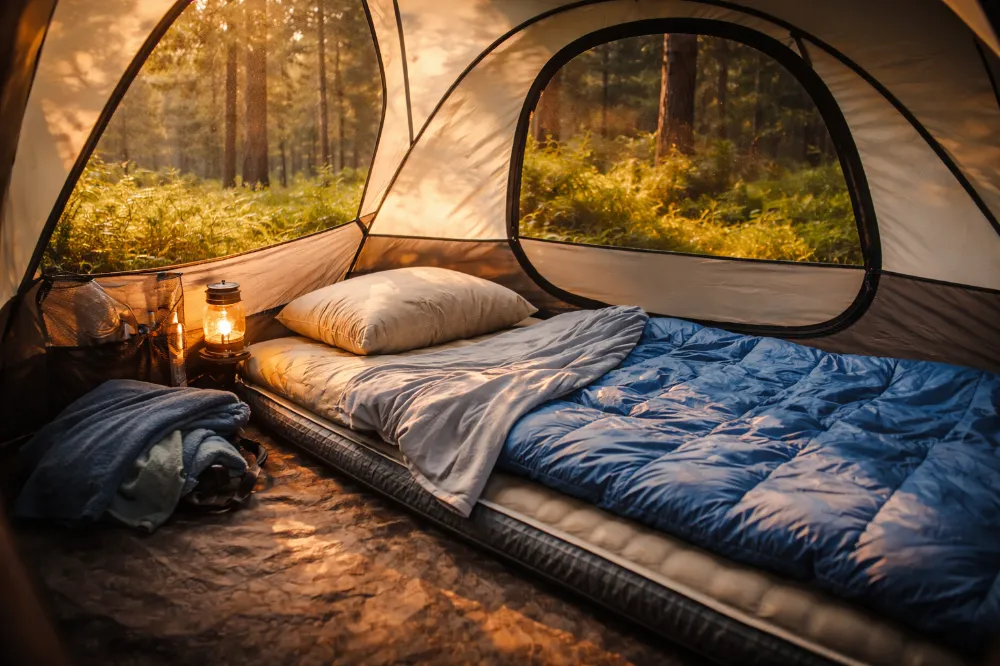
Using a tent footprint, tarp, or reflective emergency blanket creates a barrier that limits heat transfer. Elevating your sleeping system further improves cooling. Cots and ventilated sleeping pads allow air to move beneath your body, reducing heat buildup and preventing that “trapped warmth” feeling common on hot nights.
Using Shade to Block Heat Before It Reaches the Tent
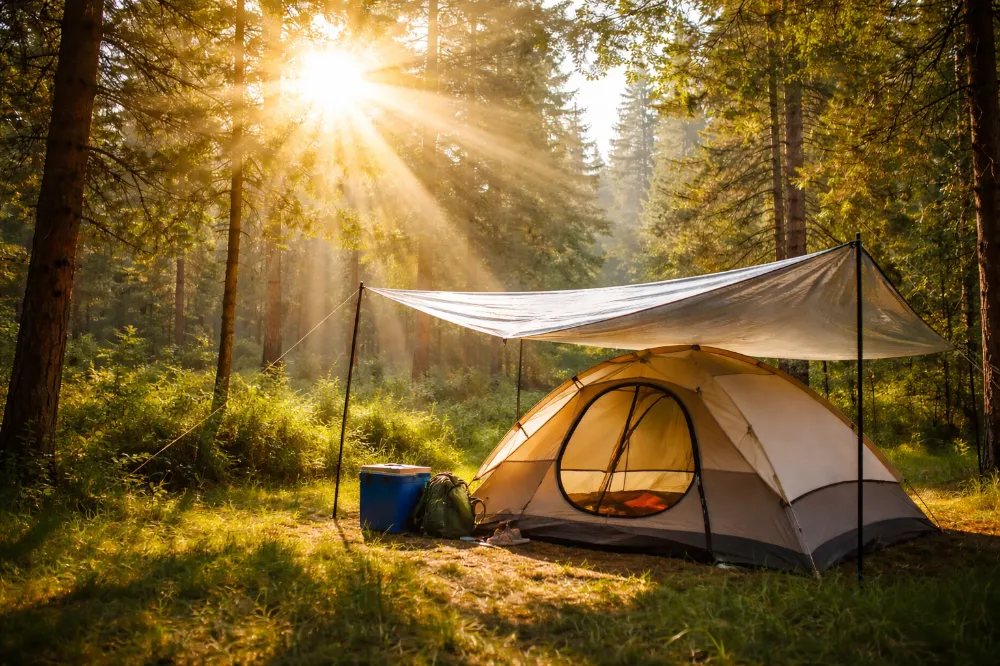
Blocking sunlight before it hits your tent is far more effective than trying to cool the interior afterward. External shade structures such as tarps act as a heat shield, preventing solar radiation from warming the tent fabric in the first place.
A properly positioned tarp should be suspended above the tent with enough space to allow airflow. This creates a shaded buffer zone that significantly lowers interior temperatures. Reflective materials work especially well in this setup, as they redirect heat away instead of absorbing it.
Ventilation Is About Releasing Heat, Not Just Letting Air In
Effective ventilation focuses on moving hot air out of the tent rather than simply allowing air inside. Opening vents and mesh panels early in the evening allows accumulated heat to escape before nighttime temperatures settle. Leaving them open overnight maintains airflow, especially when breezes pick up after sunset.
The cooling effect of airflow combined with moisture is an example of evaporative cooling, a natural process where heat is removed as water evaporates. This principle commonly used in hot, dry climates is explained in more detail.
Simple Cooling Techniques That Actually Work
Some of the most effective cooling methods are also the simplest. Hanging a damp cloth or bandana near a mesh panel allows air to pass through it, creating mild evaporative cooling that lowers the surrounding air temperature.
Cooling your sleeping gear before bed also helps. Sleeping pads, pillows, and blankets retain heat from the day. Airing them out in the shade before sunset prevents them from releasing that stored warmth while you sleep.
Cooking and Eating Habits That Affect Tent Temperature
Cooking near your tent introduces heat that can linger well into the night. Preparing meals at least 20 to 30 feet away and downwind prevents that warmth from settling around your sleeping area. Cooking earlier in the evening also gives heat time to dissipate before bedtime.
Food choices matter as well. Heavy meals increase metabolic activity, causing your body to generate more heat while digesting. In hot conditions, lighter meals and hydrating foods help keep your body temperature lower, making the tent feel more comfortable.
Optimizing Your Sleep System for Hot Nights
Sleeping comfort is where tent cooling truly matters. In warm weather, traditional sleeping bags often trap too much heat. Using a lightweight sheet or an unzipped sleeping bag as a blanket allows excess warmth to escape.
Sleeping pads designed for cold weather often contain insulation that reflects heat back toward the body. In summer, this can make sleeping uncomfortable. Switching to a thinner pad or ventilated design reduces heat retention and improves airflow around your body.
Clothing Choices That Support Cooling
What you wear to bed can significantly impact how hot the tent feels. Loose-fitting clothing allows air to circulate around your body, while natural fibers breathe better than synthetic materials. Light-colored clothing reflects heat rather than absorbing it.
Sleeping in heavy or tight clothing traps heat close to your skin, making it harder for your body to cool naturally.
Using Water to Cool Your Body Safely
While water won’t cool the tent itself, it’s highly effective at cooling your body. Lowering your body temperature before bed reduces how hot the tent feels once you’re inside. Rinsing your wrists, neck, and ankles with cool water or using a damp cloth on pulse points can quickly bring relief.
Staying hydrated throughout the day also improves your body’s ability to regulate temperature, making heat easier to tolerate.
Timing Your Tent Use to Avoid Peak Heat
Your tent should not be your primary shelter during the hottest part of the day. From late morning through mid-afternoon, tents heat up rapidly and offer little relief from the sun. Spending this time in shaded areas, near water, or under a tarp keeps you cooler and prevents heat buildup inside the tent.
As the sun begins to set, opening the tent fully allows trapped heat to escape. Giving the tent time to cool naturally before bedtime significantly improves nighttime comfort.
Common Mistakes That Make Tents Hotter
Many heat issues are caused by avoidable mistakes. Pitching a tent in full sun, closing vents for privacy, using dark rainflies, and storing gear inside during the day all contribute to higher temperatures. Cooking too close to the tent and relying on insulated sleeping gear in summer further compound the problem.
Cooling a tent without electricity often comes down to avoiding these mistakes as much as applying new techniques.
How Cool Can You Realistically Expect a Tent to Get?
A tent will never feel air-conditioned in extreme heat. However, with proper site selection, ventilation, shade, and sleep system choices, it’s realistic to reduce interior temperatures by 10 to 25 degrees Fahrenheit.
That difference is often enough to turn an unbearable night into a comfortable one and allows for proper rest.
Final Thoughts on How to Cool a Tent Without Electricity
Learning how to cool a tent without electricity is a skill that transforms summer camping. It shifts the experience from enduring the heat to managing it confidently. The most effective approach isn’t a single trick it’s stacking smart decisions that work together.
By choosing the right campsite, maximizing airflow, blocking solar heat, managing ground temperature, and controlling your own body heat, you create a system that works anywhere. When these strategies are combined, hot-weather camping becomes not just tolerable, but genuinely enjoyable.
FAQs
You can cool a tent without electricity by choosing a shaded campsite, maximizing airflow, using tarps for external shade, and ventilating the tent properly during cooler hours.
Yes, removing or lifting the rainfly improves airflow and allows trapped heat to escape, especially on dry, calm nights.
The best campsite is one with natural shade and steady airflow, such as near trees, ridgelines, or open forest corridors.
Yes, a tarp placed above the tent blocks direct sunlight and prevents heat from reaching the tent fabric, significantly lowering interior temperatures.
Tents stay hot at night because the ground releases stored heat and poor ventilation traps warm air inside the tent.
Tents with large mesh panels, roof vents, light-colored fabric, and higher ceilings perform best in hot weather.
In hot conditions, sleeping without a sleeping bag or using it as a blanket helps prevent heat buildup and improves comfort.
Yes, cooking near the tent adds lingering heat that can raise interior temperatures for hours, especially in still air.
Damp cloths placed near mesh panels can create evaporative cooling, slightly lowering the air temperature when there is airflow.
When combined, these strategies can realistically reduce tent temperatures by 10 to 25 degrees Fahrenheit, depending on conditions.