Best time to visit
Late July through mid-September is the best time to visit Mount Rainier: Paradise and Sunrise are open, most trails have melted out and wildflowers usually peak from late July into August.
| Best for hiking | Late July to September |
|---|---|
| Best for camping | July to September |
| Best for fewer crowds | Weekdays in September; winter at Paradise |
| Best for photography | Late July to August for wildflowers; late September to early October for fall color |
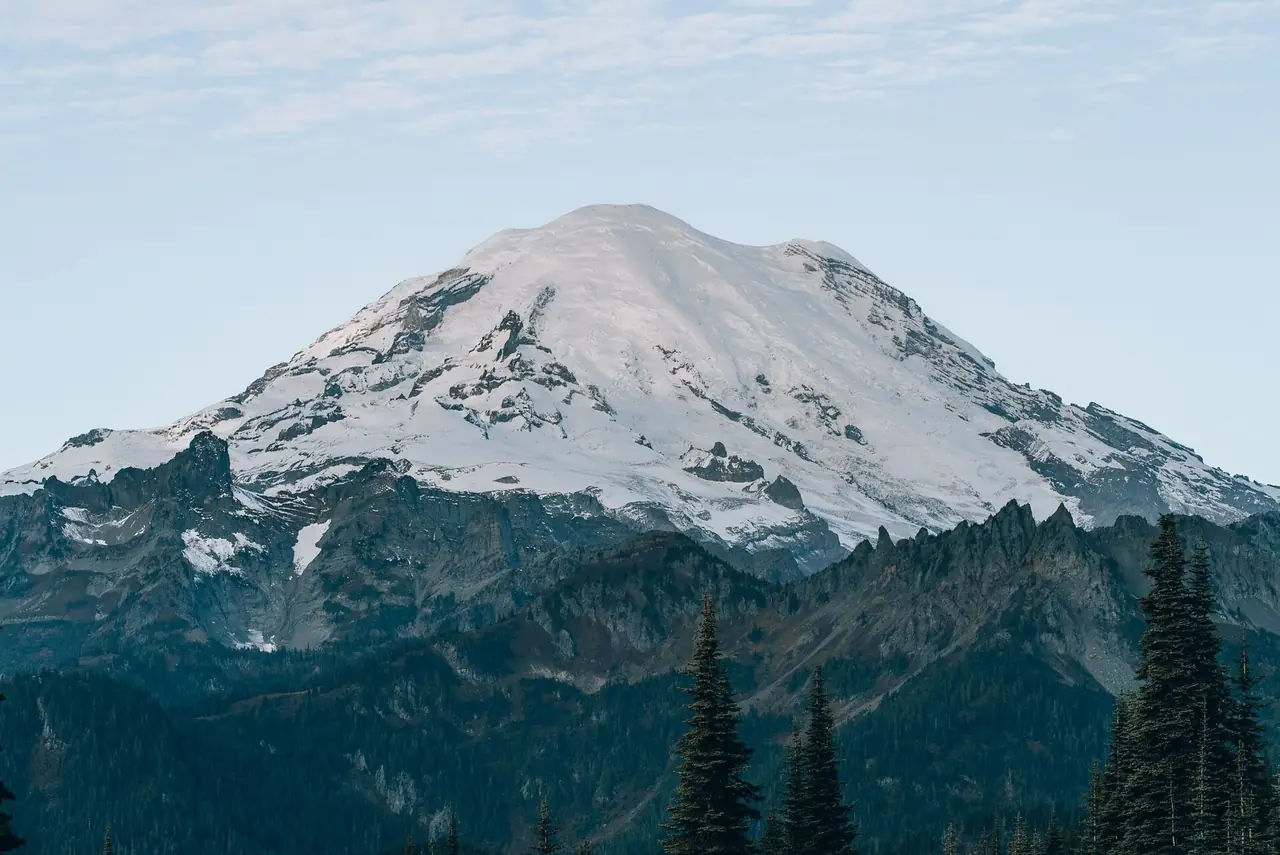
Mount Rainier National Park in Washington surrounds a 14,410-foot glaciated volcano, the most heavily glaciated peak in the lower 48. Paradise on the south side and Sunrise on the northeast side are the main high-elevation visitor areas, with subalpine meadows that bloom after the snow melts.
Snow defines the calendar. Paradise is one of the snowiest places in the country where snowfall is measured regularly, meadows can stay buried into July, and several roads close for most of the year. The summer window is short, and the park has used timed entry during peak months.
Month-by-month weather at Paradise
Ten-year averages (2015–2024) at Paradise, about 5,397 ft. Higher trails are colder, windier and snowier — temperatures typically drop 3–5°F for every 1,000 ft you climb.
Hiking & camping weather score by month
Average high and low temperature (°F)
Average precipitation (inches per month)
| Month | Avg high | Avg low | Precip | Wet days | Snow | Freezing nights | Sun/day | Score |
|---|---|---|---|---|---|---|---|---|
| January | 30°F | 21°F | 15.7 in | 21 | 89 in | 30 | 4 h | Poor |
| February | 29°F | 19°F | 13.1 in | 19 | 76 in | 28 | 5 h | Poor |
| March | 33°F | 21°F | 9.4 in | 18 | 51 in | 30 | 7 h | Poor |
| April | 38°F | 25°F | 7.1 in | 16 | 39 in | 27 | 9 h | Poor |
| May | 48°F | 32°F | 3.6 in | 13 | 10 in | 18 | 11 h | Poor |
| June | 56°F | 38°F | 3.3 in | 10 | 2 in | 7 | 12 h | Good |
| July | 66°F | 45°F | 0.7 in | 3 | 0 in | 0 | 14 h | Excellent |
| August | 68°F | 46°F | 1.1 in | 5 | 0 in | 0 | 13 h | Excellent |
| September | 58°F | 40°F | 3.5 in | 9 | 1 in | 3 | 10 h | Excellent |
| October | 46°F | 32°F | 9.6 in | 14 | 17 in | 17 | 7 h | Poor |
| November | 34°F | 23°F | 14.8 in | 19 | 59 in | 26 | 4 h | Poor |
| December | 28°F | 20°F | 16.6 in | 21 | 92 in | 30 | 4 h | Poor |
Score rates hiking and tent-camping weather only (temperature, rain, snow and heat) — it doesn't account for crowds, road closures or permits, which are covered in the seasonal notes. Data: Open-Meteo historical weather API (ERA5 reanalysis), adjusted to the hub elevation.
7-day forecast and hike score
Loading forecast…
Open in the trail forecast tool to check other trailheads.
Season by season
Spring
Spring is still winter at higher elevations. Paradise remains deep in snow, and Sunrise Road, Chinook Pass and Cayuse Pass are typically closed. Low-elevation forest trails near Longmire and Carbon River may be accessible.
Avalanche danger persists on steep slopes. Weather is often cloudy and wet.
Summer
Summer is short and busy. Snow lingers at Paradise into July, then wildflowers bloom in late July and August. Sunrise Road typically opens in early July. This is the park's busiest season, and timed entry has applied in recent years.
The mountain is often hidden by clouds, even in summer; clear days are most common from mid-July through August. Wildfire smoke can affect views in some years.
Fall
September brings fewer people and often clear weather, with huckleberry and other shrubs turning red in the meadows. Snow can return any time.
Sunrise Road usually closes in late September or early October, and other high roads close with snow.
Winter
Winter brings very deep snow at Paradise. The road from the Nisqually Entrance to Paradise is typically plowed and open during the day, weather permitting, and all vehicles are required to carry tire chains. Snowshoeing, skiing and sledding in designated areas are popular.
Most other park roads are closed. Avalanche terrain is common, and conditions change quickly.
Hikes worth timing right
| Hike | Level | Notes |
|---|---|---|
| Skyline Trail | Strenuous | Loop from Paradise through meadows to Panorama Point; snow can cover sections into July. |
| Naches Peak Loop | Easy | Wildflower loop near Chinook Pass with Rainier views; open when the pass road is open. |
| Burroughs Mountain | Moderate | Tundra ridge hike from Sunrise to close-up views of the Emmons Glacier; accessible when Sunrise Road is open. |
| Comet Falls | Moderate | Steep forest climb to one of the park's tallest waterfalls; snow can linger near the falls into summer. |
| Tolmie Peak Lookout | Moderate | Hike from Mowich Lake to a fire lookout; the access road is gravel and seasonal. |
| Wonderland Trail | Strenuous | Trail circling the mountain, usually done as a multi-day backpacking trip; requires a wilderness permit. |
Camping at Mount Rainier
Mount Rainier's main campgrounds are Cougar Rock near Longmire, Ohanapecosh in the southeast corner and White River near Sunrise, with Mowich Lake offering a small walk-in campground. Reservations are made through Recreation.gov, and all are seasonal; check nps.gov/mora for dates. Wilderness camping requires a permit.
Mount Baker-Snoqualmie and Gifford Pinchot national forests surround the park and offer additional campgrounds and dispersed camping. Store food securely: black bears, raccoons and other animals are common.
Know before you go
- Mount Rainier has used timed-entry reservations in peak season; check nps.gov/mora for current rules.
- All vehicles are required to carry tire chains in winter.
- Snow can cover high trails into July; steep snowfields are dangerous.
- The mountain creates its own weather; clouds and storms can roll in quickly.
- Wilderness camping requires a permit, and climbing above 10,000 feet or on glaciers requires a separate climbing permit.
- Cell service is limited in most of the park.
Official information, alerts and current conditions: www.nps.gov/mora.
Frequently asked questions
What is the best month to visit Mount Rainier?
August is the best single month: most trails are snow-free, wildflowers are blooming and skies are more often clear.
When is Mount Rainier most crowded?
July and August weekends are the busiest. Parking at Paradise and Sunrise fills by mid-morning.
Can you camp at Mount Rainier in winter?
Developed campgrounds are closed in winter, but snow camping is allowed in some areas with a wilderness permit. Expect deep snow and avalanche hazard.
How many days do you need at Mount Rainier?
Two days covers Paradise and Sunrise with a hike in each area. Add days for the Carbon River area or longer hikes.