
When you’re choosing a backpack, size matters — but not in the way most people think. Your height doesn’t actually determine which backpack will fit you. The secret lies in your torso. Understanding how to measure torso length for backpack fit is the single most important step to make sure your gear feels like a natural extension of your body, rather than a burden dragging you down the trail.
The difference between a long, comfortable hike and an aching back often comes down to just a few inches. Let’s break down why torso length matters, how to measure it accurately, and what to do with that measurement once you have it.
Why Torso Length Matters More Than Height
Comfort and Weight Distribution
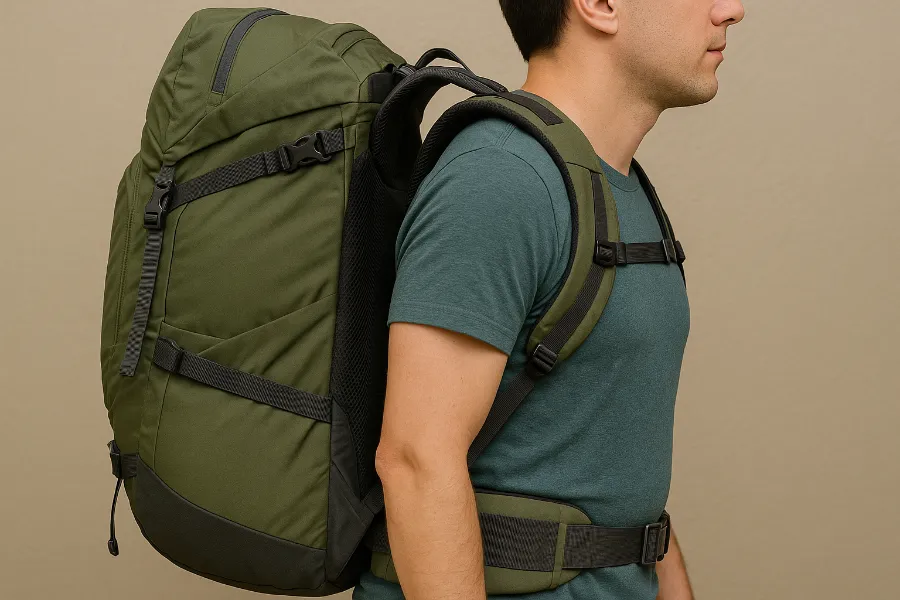
A backpack that fits properly shifts most of the weight from your shoulders to your hips. When your torso measurement aligns with your pack, the hip belt hugs the iliac crest (the top of your hip bones) and carries about 70–80% of the load. That means your legs — not your back — do the heavy lifting.
Preventing Injuries and Fatigue
An ill-fitting backpack can cause strain in your shoulders, neck, and lower back. Over long distances, this strain builds into fatigue, pain, or even injury. Correct torso measurement ensures that the load sits close to your body’s center of gravity, keeping you balanced and secure.
Backpack Efficiency and Performance
When a backpack fits correctly, every feature works better. Shoulder straps stay snug, load lifters function properly, and the sternum strap adds stability instead of distortion. In short, a backpack that matches your torso length feels like part of you.
Tools You Need to Measure Your Torso
Before you start, gather a few simple items:
- Flexible measuring tape – The soft type used for tailoring works best because it contours to the curves of your back.
- Mirror or a friend – While you can measure solo in front of a mirror, a helper makes it more accurate.
- Pen and paper (or your phone) – Write the number down. You’ll use it when comparing backpack sizing charts.
Step-by-Step: How to Measure Torso Length for Backpack
Measuring your torso is straightforward once you know the landmarks. Here’s how:
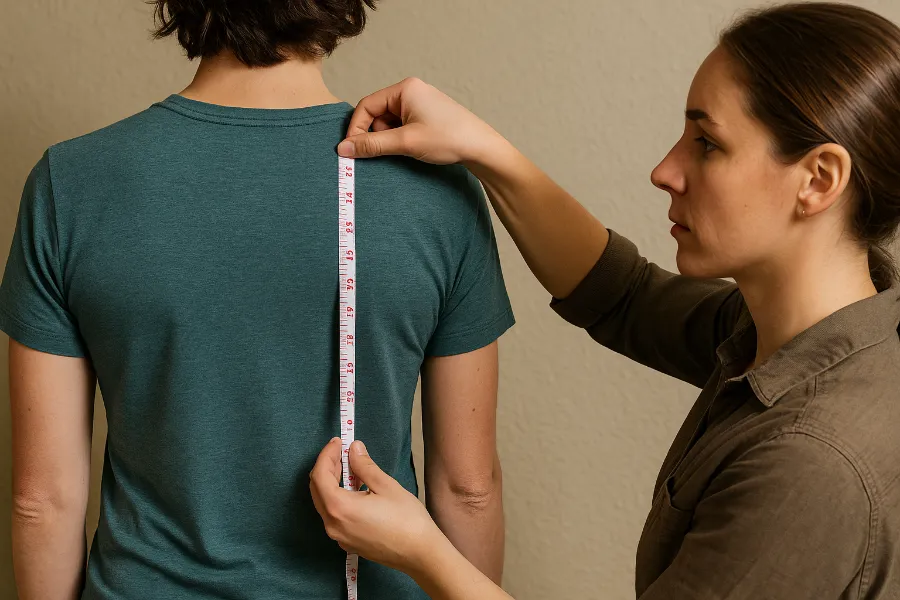
Step 1: Locate Your C7 Vertebra (Base of Neck)
Stand tall, tilt your head slightly forward, and feel the bony bump at the base of your neck. This is your C7 vertebra — the top reference point for your torso measurement.
Step 2: Find Your Iliac Crest (Top of Hip Bones)
Place your hands on your hips with your thumbs pointing toward your spine. Imagine drawing a line straight across from one thumb to the other. The spot where this line meets your spine marks the bottom of your torso.
Step 3: Measure the Distance Between These Two Points
Ask your helper (or use a mirror) to measure straight down your spine from the C7 vertebra to the line at your iliac crest. This distance, usually between 15 and 22 inches, is your torso length.
Common Mistakes to Avoid
- Starting at the wrong vertebra (make sure it’s the prominent bump at the base of your neck).
- Measuring down to your waistline instead of the iliac crest.
- Allowing the tape to slope off-center — keep it straight and snug against your back.
Matching Your Measurement to Backpack Sizes
Now that you know your torso length, it’s time to put it to use.
Typical Size Ranges (Small, Medium, Large, XL)
Most outdoor brands size backpacks like this:
| Torso Length | Pack Size |
|---|---|
| Up to 15″ | Extra Small |
| 16–17″ | Small |
| 18–19″ | Medium/Regular |
| 20–22″ | Large/Tall |
Why Brand Sizing Charts Differ
Each manufacturer has its own scale. For example, Osprey’s medium might fit a slightly different range than Gregory’s medium. Always check the brand’s official chart before purchasing.
What to Do If You’re Between Sizes
If your torso length falls between two sizes, you have options:
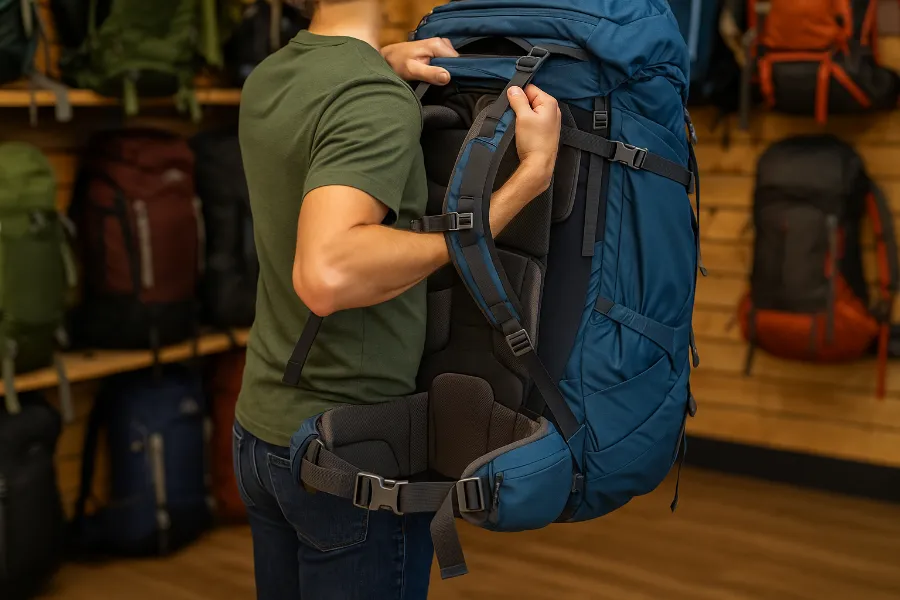
- Try both sizes in-store, ideally with weight in the pack.
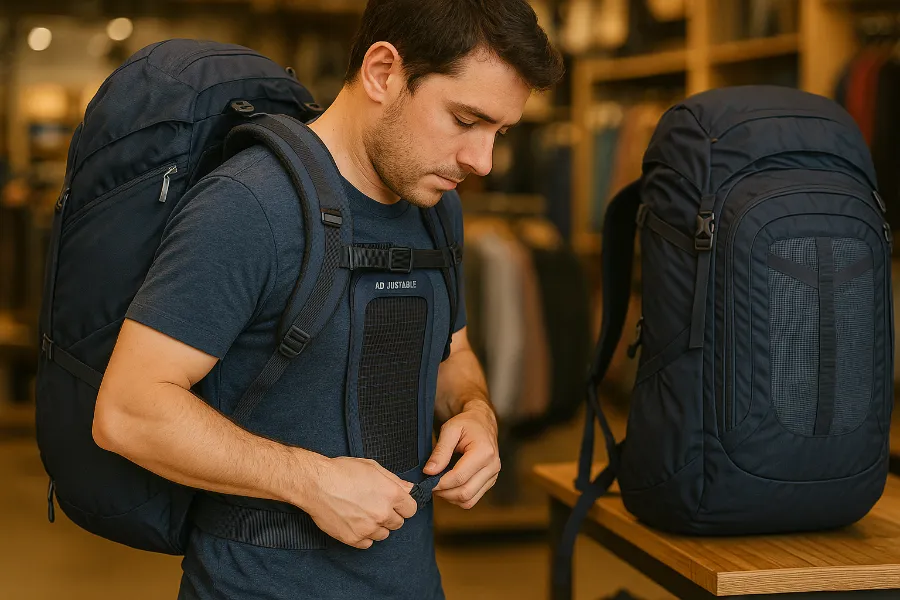
- Look for a backpack with an adjustable suspension system, which allows fine-tuning for half-inch differences.
Trying On and Adjusting Your Backpack
Measuring torso length is only the first step. A proper fit requires adjusting your backpack once it’s on your body.
Hip Belt Fit and Adjustment
Fasten the hip belt so the padding wraps snugly around the iliac crest. Most of the pack’s weight should rest here, not on your shoulders.
Shoulder Straps and Load Lifters
Tighten the shoulder straps so they hug your shoulders without carrying the bulk of the weight. Then adjust the load lifters (straps connecting the top of the shoulder harness to the pack). They should sit at about a 45-degree angle.
Sternum Strap for Stability
Slide the sternum strap until it sits just below your collarbones. Buckle and tighten to bring the shoulder straps into a comfortable position without restricting breathing.
On-the-Trail Adjustments
After a few miles, even the best fit may shift. Many hikers alternate between tightening the shoulders and loosening the hips (and vice versa) to relieve pressure points.
Special Considerations for Different Body Types
Short Torso Adjustments
- Look for packs with shorter back panels.
- Adjustable torso lengths help fine-tune the fit.
- Ensure the hip belt sits on your hips, not below them.
Long Torso Adjustments
- Choose backpacks with extended back panels.
- Load lifters are especially important for tall users to prevent shoulder strain.
- Ventilation systems can reduce sweat since taller packs cover more back area.
Average Torso and Adjustable Systems
- Most packs are designed for average torso lengths (around 18–20″).
- Even so, adjustable suspension systems let you dial in the fit more precisely.
FAQs About Backpack Torso Measurement
Why is torso length more important than height?
Because two people of the same height can have very different torso proportions. Backpack fit depends on torso length, not how tall you are.
How often should I measure my torso?
Usually once is enough, but if your body changes significantly (weight loss, muscle gain, or growth for youth), remeasure.
Does chest size matter when choosing a backpack?
Yes, especially for women and broader-chested men. It affects shoulder strap comfort and sternum strap placement.
What are the signs of an ill-fitting backpack?
If your shoulders ache, the hip belt rides too high or too low, or the load feels unstable, your pack doesn’t match your torso length.
Final Thoughts
Learning how to measure torso length for backpack fit is a small investment of time that pays huge dividends on the trail. With the right torso measurement, you’ll find a pack that carries like a partner, not a punishment. Comfort, safety, and performance all begin with this one number.
So grab that tape measure, find your C7 and iliac crest, and unlock a world of better backpacking adventures. Once you have your torso length, you’re not just buying a bag — you’re choosing a travel companion designed specifically for your body.