This guide contains affiliate links. If you buy through them, Arrive Outdoors may earn a commission at no extra cost to you. Learn more.
Joshua Tree camping comes down to three decisions: reserved or first-come site, water or no water, and inside or outside the park. The park has eight family campgrounds, and only two of them, Black Rock and Cottonwood, have drinking water. Most sites are reserved through Recreation.gov during the cool season and sell out on weekends from October through April, so the reliable backup is dispersed camping on Bureau of Land Management (BLM) land north and south of the park. Below is how each campground compares, when to go, and the rules that trip people up.
For month-by-month temperatures, highlights and the best hikes, see the Joshua Tree destination guide.
Joshua Tree campgrounds compared
All the park's campgrounds are primitive by most standards: a picnic table and fire ring at each site, toilets nearby, and no hookups or showers anywhere. The big differences are water, scenery, elevation and how you get a site. Reservation status has shifted over the years (Ryan, for example, moved from first-come to reservable), so treat the "how to get a site" column as a starting point and confirm on nps.gov/jotr.
| Campground | Area | How to get a site | Water | Best for |
|---|---|---|---|---|
| Black Rock | Northwest corner, near Yucca Valley (own entrance road) | Reservations | Yes, plus flush toilets and an RV dump station | Families, RVs, hikers heading into the Little San Bernardino foothills; has equestrian sites |
| Cottonwood | South end, near the Cottonwood Visitor Center | Reservations | Yes, plus flush toilets | Travelers coming from Interstate 10, Lost Palms Oasis hikers, warmer winter nights; has group sites |
| Indian Cove | North side, reached from Highway 62 (no road connection to the park interior) | Reservations | No | Climbers, boulder scenery, quick access from Twentynine Palms; has group sites |
| Jumbo Rocks | Central park, near Skull Rock | Reservations | No | Classic boulder camping, sunrise and stargazing; the largest campground |
| Ryan | Central park, near Ryan Mountain | Reservations | No | Central location for Keys View and Ryan Mountain; equestrian sites at Ryan Horse Camp |
| Hidden Valley | West-central, by the Hidden Valley trail and climbing areas | First-come, first-served | No | Climbers; small sites, limited RV length |
| Belle | East-central, off Pinto Basin Road | First-come, first-served (seasonal) | No | Quieter nights, dark skies |
| White Tank | East-central, off Pinto Basin Road | First-come, first-served (seasonal) | No | Small and quiet; tents and small vehicles |
Which campground should you pick?
- You want water and real toilets: Black Rock or Cottonwood. Both are on the edges of the park, so add drive time to the central sights.
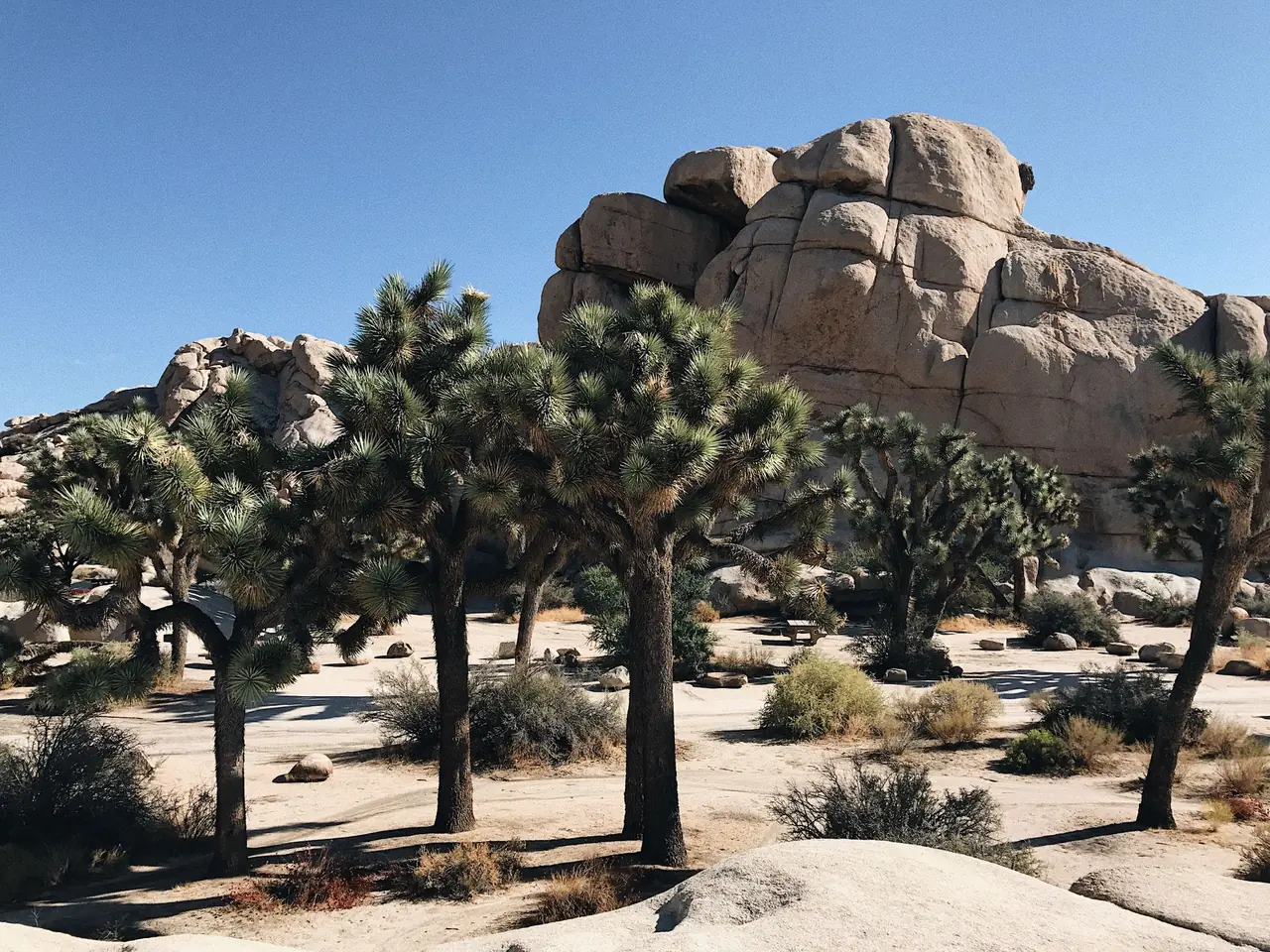
- You want the iconic boulders-and-Joshua-trees campsite: Jumbo Rocks or Hidden Valley. Book Jumbo Rocks early; arrive midweek for Hidden Valley.
- You're climbing: Hidden Valley puts you next to the most popular crags; Indian Cove has its own rock and is easier to reach from the north.
- You're camping in winter: Cottonwood sits lower and usually runs a few degrees warmer at night than the high central campgrounds, where frost is common.
- You have an RV or trailer: Black Rock and Cottonwood handle larger rigs best. Hidden Valley, Belle and White Tank have tight sites; check the length limits on each campground page before you go.
Reservations vs first-come sites
Reservable campgrounds book on Recreation.gov on a rolling window that opens months ahead; the exact window and season are on each campground's page and have changed before, so check rather than rely on a number from a forum. Some campgrounds switch to first-come, first-served in the hot season, when demand drops.
For first-come campgrounds, a few rules of thumb hold up:
- Arrive Thursday or early Friday for a weekend between October and May. By Friday afternoon, Hidden Valley is usually full.
- Midweek is far easier, especially in December and January outside holiday weeks.
- Have a fallback picked out before you drive in. Cell service is spotty inside the park, so download the BLM area map or a backup campground's directions in town.
- Stay limits apply, with a tighter limit during the busy season. They're posted on the park's camping page.
Group and equestrian camping
Groups too big for a family site have dedicated group campgrounds at Cottonwood, Indian Cove and Sheep Pass (a group-only campground in the center of the park). Group sites are reserved on Recreation.gov and have their own size limits for people and vehicles.
If you're bringing horses or pack stock, use the equestrian sites at Black Rock or Ryan Horse Camp. Stock users need to bring their own water and certified weed-free feed; check the park's stock-use rules for current requirements.
Free BLM camping outside the park
When park campgrounds are full, BLM land is the standard answer. It's free, there's no reservation, and there are no facilities at all.
- North of the park: BLM parcels in the desert north of Highway 62, around the towns of Joshua Tree and Twentynine Palms, are popular with weekend campers. Access is on dirt roads that vary from graded to sandy. Land ownership here is a patchwork of public and private parcels, so confirm you're on public land with a current BLM map or app before you set up.
- South of the park: BLM land near the Cottonwood (south) entrance off Interstate 10 offers dispersed sites close to Cottonwood Spring and the Lost Palms Oasis trailhead.
How to do it right:
- Camp on existing, already-disturbed sites. Desert soil crusts take decades to recover from tire tracks.
- Pack out everything, including human waste where there's no way to bury it properly. Carry a portable toilet or waste bags.
- Check fire restrictions with the local BLM field office. Restrictions are common in the hot months, and a fire on dispersed land needs the same care as anywhere: see how to put out a campfire completely.
- Stay limits apply on BLM land too, typically measured in days per site before you have to move.
Backcountry camping inside the park
Backpackers can camp in the park's backcountry by registering at a backcountry board and following the distance-from-road and distance-from-trail rules, which are designed to keep campsites out of sight. Some areas, including day-use zones around popular spots, are closed to overnight use. Read the park's backpacking page first; you'll need to carry every drop of water.
When to camp in Joshua Tree
Elevation in the campgrounds runs from roughly 3,000 feet (Cottonwood) to over 4,000 feet (Jumbo Rocks, Hidden Valley, Ryan), so expect big swings between afternoon and pre-dawn temperatures in every season.
| Season | What it's like | Camping notes |
|---|---|---|
| Spring (Mar–May) | Peak season. Mild days, wind, wildflowers after wet winters; heat builds fast in May. | Weekends and spring break sell out. Stake tents well for wind. |
| Summer (Jun–Sep) | Dangerous daytime heat; warm nights; occasional monsoon storms and flash floods. | Easy to get a site. Hike only at dawn; shade your tent (see how to cool a tent without electricity). |
| Fall (Oct–Nov) | Second prime season. Heat fades through October; climbing season returns. | Weekends fill again. Nights get cold by November. |
| Winter (Dec–Feb) | Clear, mild days; nights often below freezing; occasional rain or light snow. | Quietest weekdays of the year. Bring a bag rated well below the low (see cold-weather camping). |
Average highs and lows by month are on our March, October and other monthly weather guides. Before you leave, check the actual forecast for your campground: the Trail Weather tool flags heat, wind and freezing temperatures for any location.
Water, food and supplies
Water is the single biggest planning item. The NPS recommends at least a gallon (about 4 liters) per person per day, and more for hiking or hot weather. Outside Black Rock and Cottonwood, water is available at a few points such as some visitor centers and entrance areas; check the current park map, and don't count on any spigot working.
- Bring water in large refillable jugs (a 7-gallon water jug covers two people for a long weekend with some to spare).
- Fill up on groceries, ice and firewood in Yucca Valley, Joshua Tree or Twentynine Palms on the north side, or Indio/Coachella on the south side. There are no stores inside the park.
- Keep food sealed in your vehicle or a hard cooler. Ravens, ground squirrels and coyotes raid campsites quickly.
For the rest of your kit, the car camping essentials checklist covers everything a drive-in Joshua Tree site needs; add extra tent stakes or sand anchors, since many sites are on coarse sand and granite grit.
Campfire and campground rules
- Fires only in the provided fire rings or grills, and only when restrictions are not in effect. No fires on BLM land during restrictions either.
- No gathering wood. Collecting any vegetation in the park, dead or alive, is prohibited. Buy firewood outside the park, ideally locally sourced to avoid moving pests.
- Quiet hours and generator hours are enforced in campgrounds; check the posted times.
- Vehicle limits per site are posted, usually two vehicles. Park only on the site's pad.
- Pets must be leashed and are allowed in campgrounds and on roads, but not on trails.
- Don't climb on, hang anything from, or tie off to Joshua trees. They're protected and easily damaged.
Camping for climbers
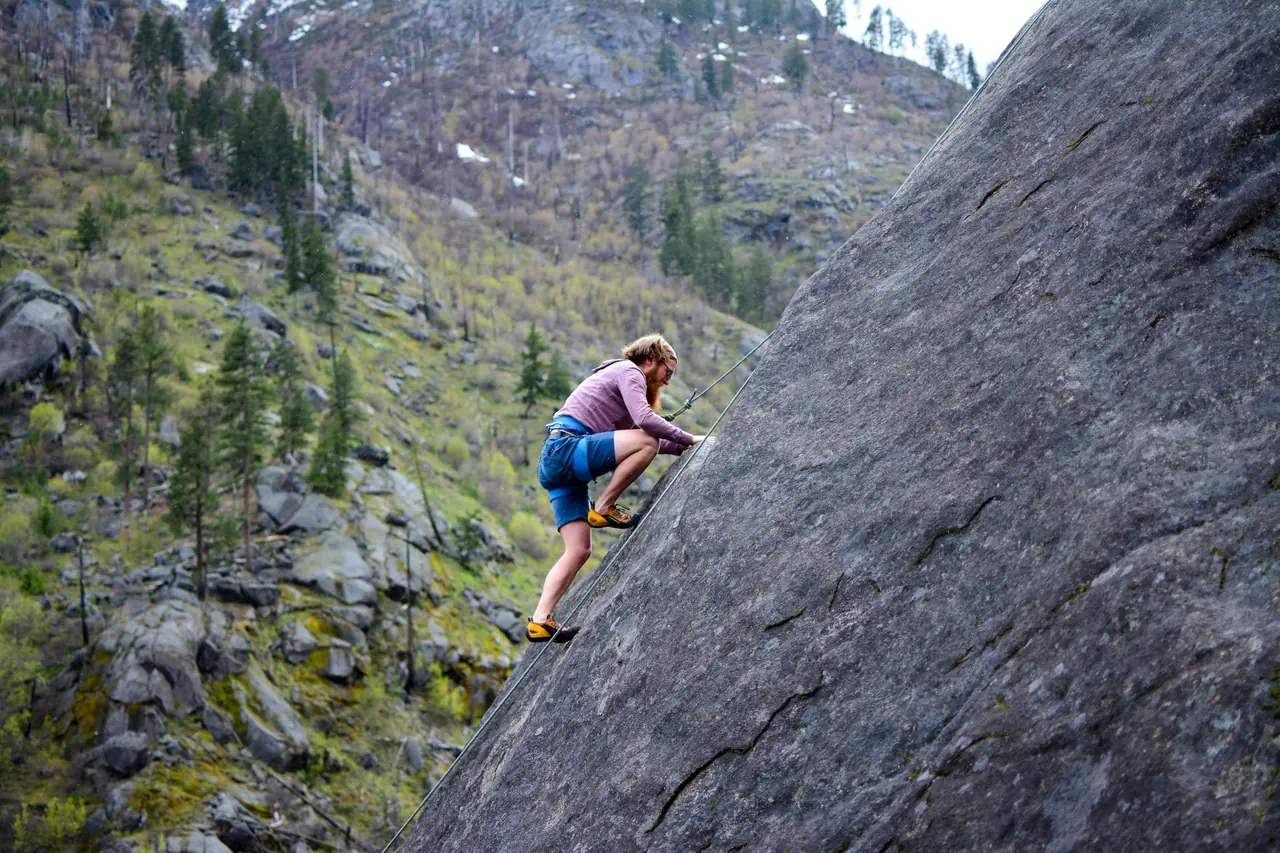
Joshua Tree is one of the country's major winter climbing areas, and the campgrounds double as crag access. Hidden Valley is the traditional climbers' campground, with routes starting a few minutes' walk from many sites; Jumbo Rocks, Ryan and Indian Cove all have climbing nearby too. A few practical points:
- Climbing season tracks camping season: October through April, with the busiest weekends in fall and spring.
- Many popular formations have seasonal raptor closures and rules on fixed anchors and bolting; check the park's climbing page.
- Approaches cross fragile desert soil. Use established climber trails and keep packs and pads off vegetation.
- If you're new to moving on rock, start with easy scrambles and read our class 3 scramble guide to understand where scrambling ends and roped climbing begins.
Stargazing from your campsite
Joshua Tree is a certified International Dark Sky Park, and the campgrounds are some of the best viewing spots in Southern California. The eastern campgrounds (Belle, White Tank and the Pinto Basin side of the park) sit farthest from the glow of the Coachella Valley and the Highway 62 towns.
- Plan around the new moon. A bright moon washes out the Milky Way for days on either side of full.
- The Milky Way's bright core is best seen in the summer months, but cool-season skies are often clearer and far more comfortable.
- Use a red headlamp in camp so you don't wreck your own or your neighbors' night vision.
- Nights get cold fast after sunset in the cool season. Bring a warm layer and a camp chair, and check sunset times with the Sunrise, Sunset & Daylight Calculator.
Quick Joshua Tree camping checklist
- Reservation confirmation, or a first-come plan with a BLM backup
- At least 1 gallon (4 L) of water per person per day, plus extra
- Firewood bought outside the park (or none, if restrictions are on)
- Sleeping bag rated well below the forecast low; insulated pad
- Shade for daytime: tarp, canopy or umbrella, with stout stakes for wind
- Sun protection: hat, sunglasses, sunscreen, a sun hoodie
- Downloaded offline maps; printed campground and backup directions
- Hard-sided food storage or vehicle storage for anything edible
Build the full list for your dates and group size with the Packing List Generator.
Frequently asked questions
Which campgrounds in Joshua Tree have water?
Only Black Rock and Cottonwood have drinking water and flush toilets. Every other campground in the park is dry, with vault toilets, so bring all the water you need: plan on at least a gallon per person per day, more in warm weather.
Can you camp in Joshua Tree without a reservation?
Sometimes. A few smaller campgrounds have been first-come, first-served, and reservable campgrounds release unclaimed sites, but on fall and spring weekends nearly everything fills by Friday morning. Check nps.gov/jotr for the current mix, and have a BLM backup outside the park.
Is there free camping near Joshua Tree?
Yes. Bureau of Land Management land north of the park near the towns of Joshua Tree and Twentynine Palms, and south of the park near the Cottonwood entrance off Interstate 10, allows dispersed camping. There are no facilities, so camp on existing sites, pack out all trash and check current BLM rules and fire restrictions.
Can you have a campfire in Joshua Tree?
Only in the fire rings or grills at established campground sites, and only when fire restrictions are not in effect. Gathering wood or any vegetation, dead or alive, is prohibited in the park, so bring firewood from nearby towns.
What is the best campground in Joshua Tree?
Jumbo Rocks and Hidden Valley are the classic picks for boulder scenery and climbing access, Black Rock and Cottonwood are best if you want water and flush toilets, and Indian Cove suits climbers and anyone arriving from the north side.