
Spending time in nature can be magical, but it can also be unpredictable. Trails vanish. Landmarks look identical. One wrong turn and suddenly, panic sets in — you’re not sure where you are. This is the moment when knowing what to do if you get lost in the woods can make the difference between a temporary scare and a real survival emergency. The key isn’t luck. It’s preparation, calm thinking, and using proven techniques to get back to safety.
Let’s walk through exactly how to respond, step by step.
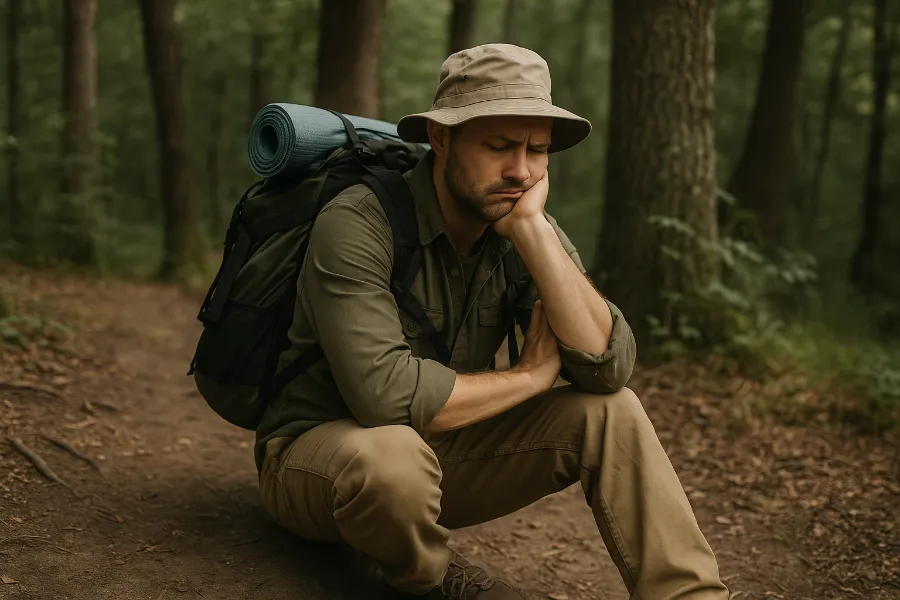
The STOP Method
The STOP method is one of the most widely recommended approaches when you realize you’re lost. It keeps you grounded and helps prevent mistakes that make things worse.
Stay Put & Stay Calm
The moment you suspect you’re lost, don’t keep walking blindly. Stop moving. Take a few slow breaths. Panic is your biggest enemy. Staying calm conserves your energy and gives rescuers a much better chance of finding you. If the area is unsafe — maybe it’s swampy, steep, or exposed — move to safer ground, then stay put.
Think
Rewind your memory. Where were you last certain of your location? Did you pass a fork, a stream, or a distinctive rock? Think carefully before making a move. Often, the clues you need are in your recent footsteps.
Observe
Look at your surroundings. Can you see landmarks, mountain ridges, or the position of the sun? Check for your footprints, bent grass, or broken twigs. If you have a compass or a phone with GPS (in airplane mode to save battery), use it. Assess your food, water, and daylight — how much do you realistically have?
Plan
Now make a strategy. Mark your current location with rocks, sticks, or survey tape — this will be your “base.” From there, you can explore carefully, making clear markers as you go, or you can decide it’s safer to stay put and wait for help. Either choice is better than wandering aimlessly.
Signaling for Help
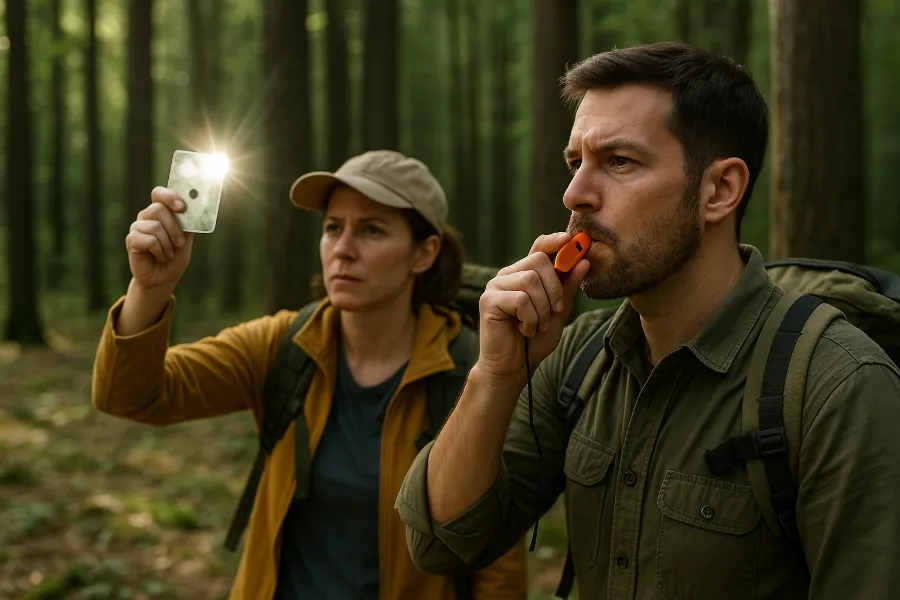
Getting found is often faster than finding your own way out. Make yourself easy to spot.
- Whistle: Three blasts is the universal distress call.
- Mirror or flashlight: Reflect light toward aircraft or across valleys.
- Fire: Only when safe. Add green branches for thick smoke.
- Bright clothing: Lay it out in an open clearing to attract attention.
- SOS signals: Create large letters from rocks or branches in a clearing.
Remember: rescuers are trained to look for patterns. Three of anything — whistles, flashes, or fires — signals distress.
Navigation Techniques
If you decide self-rescue is necessary, use the landscape wisely.
Following Rivers and Streams
Water is life, and it’s also navigation. Streams often lead downhill to larger rivers, and eventually to roads, bridges, or towns. Stay cautious — don’t risk crossing dangerous rapids or boggy ground.
Seeking Higher Ground
Climbing a ridge or hill can reveal roads, power lines, or clearings. It can also give you a cell signal. Always mark your way back to base before heading up.
Using a Compass, Map, and Landmarks
If you carry a compass and map, now’s the time to use them. Triangulation — lining up two known landmarks — can pinpoint your location. Even without tools, natural signs can help: moss often grows on the shadier side of trees, and rivers generally flow downhill toward civilization.
Survival Essentials
You may need to spend a night in the woods. Prioritizing essentials can keep you alive and clear-headed.
Finding Water
You can survive weeks without food, but only days without water. Ways to find it:
- Listen for running water — streams or brooks.
- Collect morning dew with cloth.
- Melt snow (but don’t eat it raw — it lowers body temperature).
- Watch birds and insects — they often lead to water sources.
If you lack a purifier, filter through fabric to remove debris before drinking.
Staying Hydrated and Conserving Energy
Avoid hiking during the hottest part of the day (10 a.m. to 4 p.m.). Rest in shade. Breathe through your nose to retain moisture. Walk at a steady, sustainable pace.
Shelter and Staying Warm
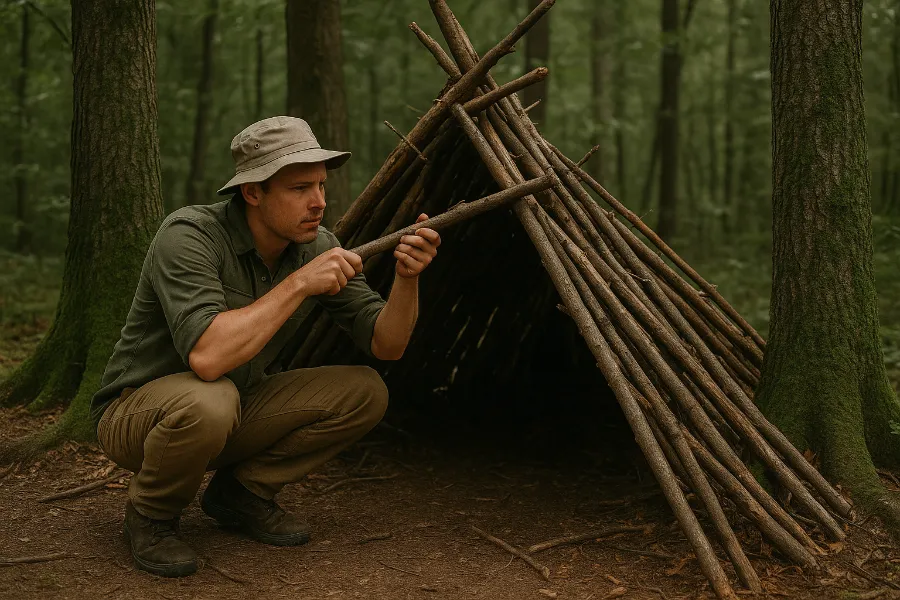
Exposure can be deadlier than hunger. Build a shelter with branches, leaves, or a tarp if you have one. Stay dry, avoid sweating, and insulate yourself from the ground with leaves or pine boughs.
Food Considerations
Food is secondary to water and shelter. But if you must, berries and plants that animals eat are often safe in moderation. Avoid mushrooms unless you’re trained to identify them.
Common Mistakes to Avoid
Survival situations often turn deadly because of simple errors. Don’t make these mistakes:
- Panicking and wandering aimlessly. This makes it harder for rescuers to find you.
- Ignoring small problems. Treat blisters, hunger, or dehydration early.
- Overexertion. Pushing too hard drains your energy and clouds judgment.
- Relying solely on your phone. Batteries die, signals vanish. Always carry analog tools.
How to Prevent Getting Lost in the First Place
Preparation is your best survival tool.
- Leave a trip plan: Tell someone your route, when you’ll return, and when to call for help.
- Carry essential gear: Map, compass, whistle, mirror, flashlight, knife, emergency blanket, and extra water.
- Use orientation habits: For example, always step off the trail on the same side when taking breaks.
- Mark trails: Use sticks, rocks, or survey tape at decision points.
- Check maps frequently: Don’t wait until you’re unsure to confirm your position.
A small kit and a few habits can prevent a terrifying situation from happening in the first place.
Mindset and Staying Positive
The most underrated survival tool is your mindset. Staying calm, confident, and resourceful gives you a far better chance of making it out safely. Rescuers are looking for you. Every hour that passes, the search grid grows. Believe that you will be found — because most people who get lost in the woods are.