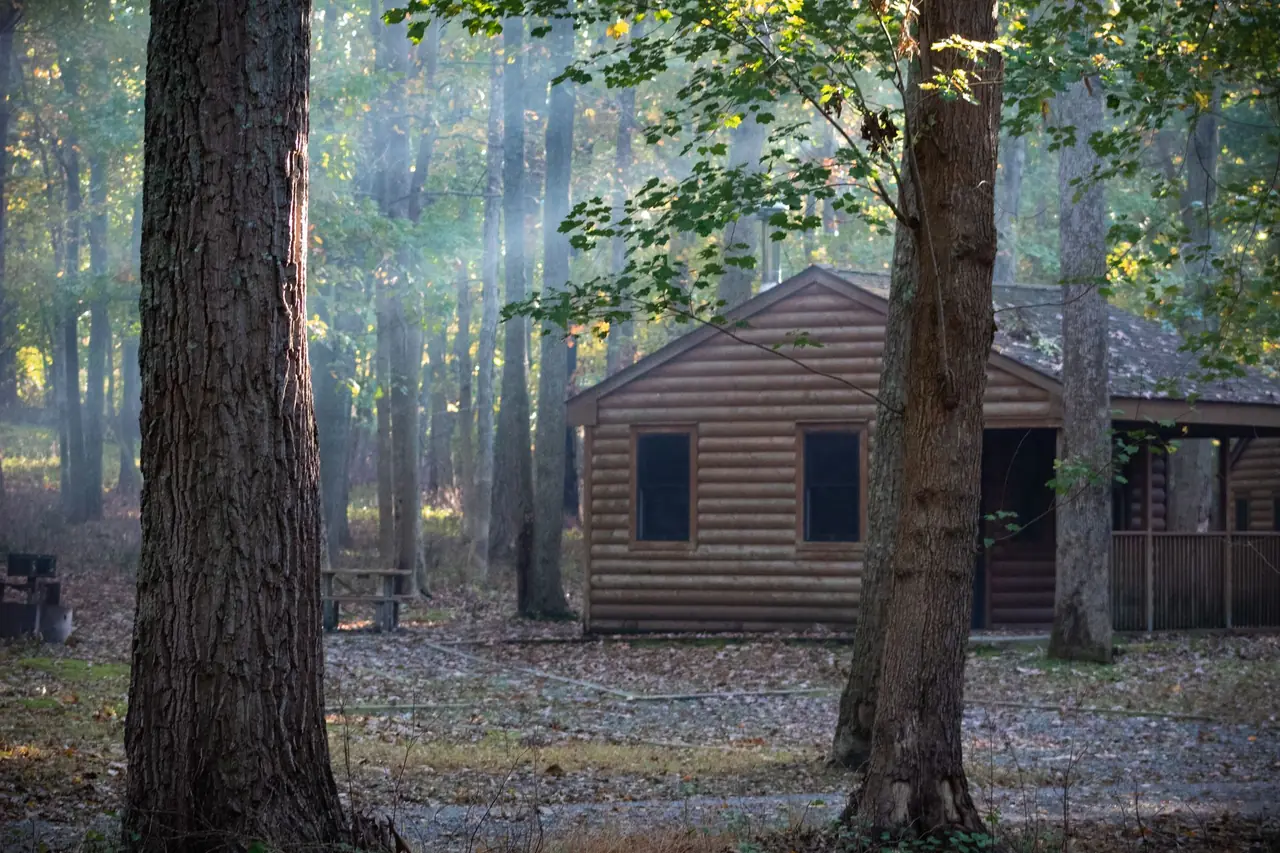
Cabin camping means sleeping in a simple cabin at a campground, state park or public-land site instead of a tent. A typical camping cabin gives you four walls, a roof, beds or bunks with bare mattresses, and sometimes electricity and heat; you bring the bedding, cooking gear and food, and use the campground's shared bathrooms. At the rustic end, Forest Service rental cabins may have a wood stove and an outhouse and nothing else. Knowing which kind you've booked decides what you pack.
Types of camping cabins
"Cabin" covers everything from a plywood room with a bunk to a log house with a kitchen. These are the main types, from most to least basic in amenities.
| Type | Where you find it | Usually provided | Usually not provided |
|---|---|---|---|
| Rustic backcountry cabin or fire lookout | National forests and other public lands; some reached only on foot, by ski, boat or plane | Shelter, bunks or cots, table, often a wood or propane stove, outhouse | Electricity, running water, mattresses at some, bedding, cookware at many |
| Camping cabin (basic) | Private campgrounds such as KOA, many state parks | Beds or bunks with mattresses, a light and outlet at many, outdoor fire ring and picnic table | Bathroom, kitchen, linens, cookware |
| Yurt | Many state parks, some private campgrounds | Platform floor, bunks or futons, sometimes heat and electricity | Bathroom, kitchen, linens |
| Modern or deluxe cabin | State parks, private campgrounds, some national park concessioners | Bathroom, kitchen or kitchenette, heat or AC, sometimes linens | Varies; check whether linens and cookware are included |
The listing is the only reliable guide. Read it closely for: mattresses or bare bunks, linens, electricity, heat, water at the cabin, bathroom location, cooking rules inside, and how far you park from the door.
Campground camping cabins
The one-room camping cabin is the most common type. At KOA campgrounds, for example, basic Camping Cabins typically have beds with mattresses but no linens and no bathroom, while their Deluxe Cabins add a bathroom and a kitchenette. Many state parks follow the same split between "rustic" and "modern" cabins. Cooking is usually outside on a grill or fire ring, and some campgrounds don't allow cooking inside at all.
State and national park cabins
State parks rent everything from camper cabins with bunks to full housekeeping cottages. Yurts are popular in many state park systems. In and near national parks, cabins are often run by concessioners and range from rustic to lodge-style. In Shenandoah National Park, Lewis Mountain has rustic cabins, and the Potomac Appalachian Trail Club rents primitive cabins in the backcountry.
Forest Service rental cabins and lookouts
Across the country, the Forest Service rents former guard stations, ranger cabins and fire lookouts, reserved through recreation.gov. These are the real rustic option: often no electricity or drinking water, a wood stove for heat, an outhouse, and sometimes a long hike, ski or snowmobile ride in winter. Alaska's national forests have a large network of public-use cabins, many reachable only by floatplane, boat or trail. Each cabin's page lists what's inside, access, and what you must bring. Treat it as a backcountry trip with walls.
Backcountry huts
Some hiking clubs run huts, which fill a similar niche. The Appalachian Mountain Club's huts in the White Mountains serve meals in summer and offer self-service bunks in some seasons; you hike in with a sleeping bag. See the New Hampshire hiking guide for how they work.
What to bring: cabin camping checklist
Assume nothing is provided unless the listing says so. This table assumes a basic camping cabin; for a rustic cabin, add the items in the last column.
| Category | Basic camping cabin | Add for a rustic cabin |
|---|---|---|
| Bedding | Sleeping bags or fitted sheets and blankets, pillows | Sleeping pads if there are no mattresses |
| Cooking | Camp stove and fuel or charcoal, lighter, pots and pans, utensils, plates, mugs, cooler | All cookware even if some is listed, water filter or extra water |
| Water | Water bottles, a large jug if the spigot is far away | All drinking water, or a filter and a known source |
| Lighting | Headlamp per person, lantern | Extra batteries, backup lighting; assume no electricity |
| Heat and fire | Firewood bought locally, fire starters | Kindling, matches, a small saw if allowed; split wood if the cabin doesn't supply it |
| Cleaning | Dish tub, biodegradable soap, sponge, towels, trash bags | Small broom, paper towels; pack out all trash |
| Bathroom | Shower shoes, toiletry bag, towel, a flashlight for night trips to the restroom | Toilet paper and hand sanitizer for the outhouse |
| Comfort | Camp chairs, games, extension cord if outlets exist | Warm layers and slippers for cold floors |
| Safety | First aid kit, bug spray, sunscreen | Battery CO alarm if there's a stove, map, communication plan |
Use the camp meal planner to size your food, and see car camping essentials for the full kitchen and comfort list. Don't want to buy gear for one trip? Renting camping gear covers sleeping bags, stoves and coolers.
Booking tips
- Book early for peak dates. Cabins are far fewer than campsites, so summer weekends, holidays and fall-color weekends book out first. Most systems open reservations a set number of months ahead; check the window on the booking site and be ready when it opens.
- Look midweek and shoulder season. Spring and fall weekdays are the easiest to get and often the best weather.
- Use the right system. Federal cabins and lookouts are on recreation.gov; state parks use their own state reservation sites; private campgrounds take bookings directly.
- Check access. Some cabins are a short walk from the car, others require a hike, a high-clearance road, or skis in winter. The listing says how you get there and when the road is open.
- Read the rules: minimum stays, pet policies, check-in times, cleaning expectations, and whether fires are allowed.
- Watch for cancellations. Many systems release cancelled nights; checking often can land a sold-out weekend.
Cabin camping by season
Cabins stretch the camping season. In spring and fall, a roof and walls make cold, wet nights comfortable that would be miserable in a tent. In winter, a cabin with a wood stove or heater is the easiest way to try cold-weather camping; read cold weather camping for sleeping warm when the stove dies down at 3 a.m. In summer, unheated cabins can be stuffy; look for windows with screens or a fan, and bring a light sheet instead of a heavy bag. Some cabins close for winter, and some rustic cabins are open only in winter when the access road becomes a ski trail.
Cabin camping with kids
A cabin is one of the best ways to introduce kids to camping. You skip the tent setup, rain doesn't end the trip, and everyone sleeps better. Kids still get the parts they'll remember: campfires, s'mores, hiking, stars and a flashlight trip to the bathroom.
- Pick a campground with a playground, a lake or easy trails nearby.
- Bring a nightlight or a lantern on a low setting; unfamiliar cabins are dark.
- Pack familiar bedding and a favorite stuffed animal.
- Plan simple meals the kids can help with.
The Camping 101 guide for first-time campers covers campground etiquette, food storage and fire basics that apply to cabins too.
Cabin etiquette and checkout
Shared cabins only stay affordable and open when each group leaves them ready for the next. Rustic cabins in particular are often maintained by volunteers or a small ranger staff.
- Leave it cleaner than you found it. Sweep the floor, wipe the table and pack out every scrap of trash and food.
- Restock firewood at cabins with a wood stove: split and stack at least as much as you used, if the rules allow cutting.
- Store food securely. Mice and other animals move into cabins that smell like dinner. Keep food in sealed bins or your vehicle, and follow posted bear-country rules.
- Close up properly: shut the stove damper once the fire is completely out, latch windows and shutters, and lock the door if a combination or key was provided.
- Use the logbook if there is one, and report damage or problems to the managing agency.
- Respect quiet hours at campgrounds; cabin walls are thinner than they look.
Cabin vs. tent camping
| Cabin | Tent | |
|---|---|---|
| Cost | Higher per night | Lower per night, but you need a tent |
| Weather | Dry in rain, warmer in cold, safer in wind | Depends on your gear and skill |
| Gear needed | Bedding, cooking, lighting | All of that plus a tent, pads and a tarp |
| Availability | Limited; books early | Many more sites and more flexibility |
| Setup | Unpack and go | Pitch and strike each trip |
| Outdoor feel | More separated from the outdoors | Closer to nature: you hear and feel everything |
| Best for | First-timers, families, shoulder seasons, groups with mixed comfort levels | Flexible trips, backpacking, people who want the full experience |
A good plan for new campers: start with a cabin, learn to cook and run a camp, then try a tent once you know what you like. The Trip Finder shows which parks near you have good weather this month, and many of them have cabins.
Frequently asked questions
What is cabin camping?
Cabin camping means staying in a simple cabin at a campground, state park or public land site instead of a tent. Most camping cabins provide a roof, beds or bunks with mattresses and sometimes electricity, while you bring bedding, cooking gear and food, and use the campground's shared bathrooms.
Do camping cabins have bathrooms?
Usually not. Basic camping cabins at private campgrounds and state parks typically use the campground's shared restrooms and showers, and rustic Forest Service cabins often have an outhouse. Deluxe or modern cabins at some parks include a bathroom and kitchen; check the listing.
Do you need sleeping bags for cabin camping?
In most camping cabins, yes. Mattresses are usually provided without sheets or pillows. Bring sleeping bags or sheets and blankets, plus pillows. A few modern cabins include linens, so check the listing.
How do you book a Forest Service cabin?
Most Forest Service and other federal rental cabins and fire lookouts are reserved on recreation.gov. Popular cabins book soon after their reservation window opens, so check the cabin's page for when dates become available and any access or gear requirements.
Is cabin camping good for families?
Yes. A cabin removes the hardest parts of a first camping trip: pitching a tent, staying dry in rain and sleeping on the ground. Kids still get campfires, hiking and the outdoors, and you don't need to buy a tent to try it.