This guide contains affiliate links. If you buy through them, Arrive Outdoors may earn a commission at no extra cost to you. Learn more.
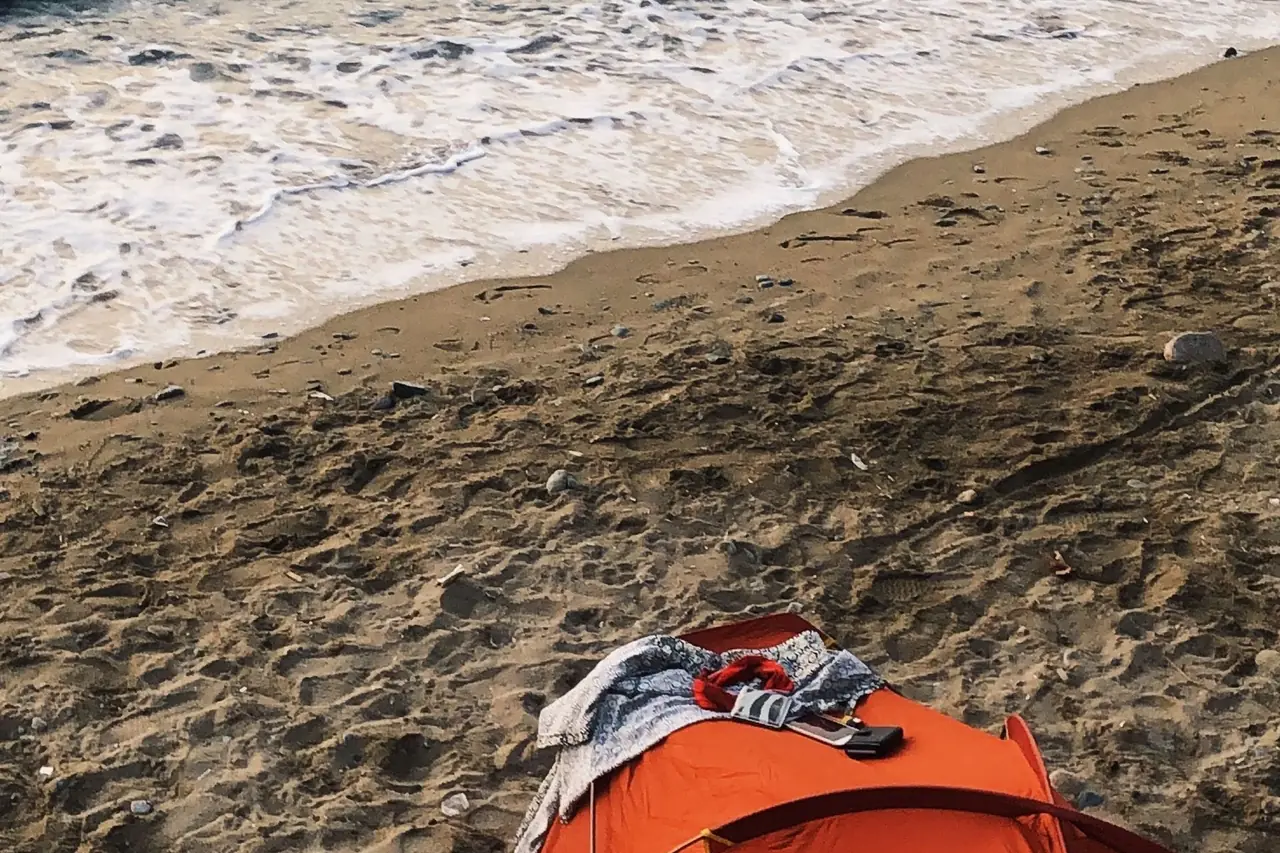
Beach camping is legal in the US only in specific places: designated campgrounds on or behind the beach, and primitive beach-camping zones at a handful of national seashores, state parks and wilderness coasts, usually with a permit. Padre Island, Cape Lookout, Assateague and the Olympic coast are the best-known places to sleep on the sand. Once you're there, three things decide whether the night goes well: pitching above the high tide, anchoring the tent so wind can't take it, and keeping sand, sun and wildlife out of your camp.
Where beach camping is allowed
Rules change, and permits, fees and reservation systems differ by park. Treat this as a starting list and confirm details on each park's official page before you go.
| Place | Type of camping | Access | Know before you go |
|---|---|---|---|
| Padre Island National Seashore, TX | Primitive camping on long stretches of open beach, plus a developed campground | Drive on the beach; far sections need 4WD | Camping permit required; soft sand; sea turtle nesting season |
| Cape Lookout National Seashore, NC | Primitive camping on most of the undeveloped beach | Ferry only; vehicles on the beach by ferry and permit | No services; bring all water; bugs in warm months |
| Assateague Island National Seashore, MD | Oceanside and bayside campgrounds; backcountry sites for hikers and paddlers | Drive to campgrounds; backcountry by foot or boat | Wild horses and raccoons raid food; reservations fill early |
| Cape Hatteras National Seashore, NC | Designated campgrounds near the beach (including Ocracoke); no camping on the open beach | Drive; off-road beach driving by permit | Campgrounds are seasonal; long tent stakes needed |
| Olympic National Park coast, WA | Wilderness beach camping | Hike in | Wilderness permit, food storage required, tide-dependent routes |
| Prairie Creek Redwoods State Park (Gold Bluffs Beach), CA | Campground on the beach | Drive (gravel road) | Roosevelt elk, wind; part of Redwood National and State Parks |
| Everglades National Park coast, FL | Backcountry beach sites | Canoe, kayak or boat only | Permit, navigation skills, insects, winter is the season |
Many state parks on the Atlantic, Gulf and Pacific coasts have campgrounds a short walk from the sand, which is the easiest way to start. Acadia has oceanside campgrounds but no camping on its beaches; see the Acadia guide. On the Great Lakes, Sleeping Bear Dunes and Indiana Dunes have campgrounds, not camping on the beach itself: at Sleeping Bear, backcountry camping is in designated sites, including on the Manitou Islands, and at Indiana Dunes it's the campground at Dunewood.
Olympic's wilderness coast
Olympic's coast is the most remote beach camping in the lower 48: sea stacks, driftwood and tide pools, reached by trails like those to Second and Third Beach, Rialto Beach's Hole-in-the-Wall, and the Ozette loop to Cape Alava and Sand Point. Overnight stays need a wilderness permit, food must be stored in an approved container (raccoons here are notorious for opening packs), and some headlands can only be rounded at low tide. The Olympic National Park camping guide and Olympic destination page cover the details.
Pick a site above the high tide
Getting the tide wrong is the classic beach-camping mistake. The water can rise several feet between low and high tide, and the beach that looked huge at dinner can be under water by 2 a.m.
- Get a tide chart for the nearest station from NOAA Tides & Currents. Note the time and height of every high tide during your stay, including the overnight one.
- Find the wrack line, the line of seaweed, shells and debris left by recent high tides. Pitch well above the highest one.
- Add margin for spring tides around the new and full moon, onshore wind and storms, all of which push water higher than the chart predicts.
- Stay off the dunes. Dune vegetation holds the beach together and is protected in most parks. Camp on the open beach between the wrack line and the dune toe, or wherever the park designates.
- Watch for creek mouths and low spots that flood from behind as the tide rises.
Anchoring a tent in sand
Standard thin stakes pull straight out of dry sand. Plan to anchor differently.
- Sand stakes: wide, long stakes (often 12 inches or more) hold far better than wire stakes. Drive them at an angle, leaning away from the tent.
- Deadman anchors: tie a guyline around a stake, stick, or a small stuff sack filled with sand, lay it sideways in a trench 8 to 12 inches deep, and bury it. Packed wet sand holds best. To pack up, dig it out rather than yanking.
- Sand bags: some campers fill bags with sand and tie off to them at each corner; useful on hard-packed or shell beaches.
- Load the tent: put your gear in the windward corners before staking so the tent doesn't take off while you work.
A low dome or tunnel tent handles wind better than a tall cabin tent. A few useful items, sparingly: sand tent stakes and sand anchor bags.
Wind and weather
Beaches are windy: there's nothing to block air moving off the water, and afternoon sea breezes are common. Pitch the narrow, low end of the tent into the wind, keep the door on the downwind side, and use every guyline. Sun shades and pop-up canopies act like sails; stake and guy them, or take them down before you leave camp. On an open beach you're often the tallest object around, so if thunder is in the forecast, have a plan to retreat to a vehicle or a building.
Keeping sand under control
- Lay a ground cloth or outdoor rug at the door and leave shoes outside.
- Keep a small brush and dustpan in the tent; sweep before bed.
- Close zippers fully and brush them off: sand is the fastest way to ruin a tent zipper.
- Store food, electronics and cameras in sealed bins or zip-top bags.
- Rinse stove and zippers with fresh water after the trip, and set up the tent at home to dry and shake out.
Sun and heat
Sand and water reflect sunlight, so you get more UV than you'd expect, and there's rarely natural shade. A tent in full sun becomes an oven by mid-morning.
- Bring your own shade: a tarp or staked canopy over your sitting area.
- Pitch the tent to catch the breeze, and open all vents and doors during the day. See how to cool a tent without electricity for more.
- Carry more water than usual: at least 1 gallon (about 4 liters) per person per day, more in heat. Most beach sites have no drinkable water.
- Sunscreen, a wide-brim hat, sunglasses and a sun hoodie. Reapply after swimming.
- Use the sunrise and sunset calculator to plan the hot midday hours around shade and swims.
Wildlife: ponies, raccoons, birds and sea turtles
- Assateague's horses: they're wild and they bite and kick. The park asks visitors to stay at least 40 feet away (about a bus length) and never feed them. Horses and raccoons will raid unattended food; store everything in your vehicle or a hard-sided container.
- Raccoons, foxes and gulls: they patrol beach camps. Never leave food in your tent or out at night.
- Insects: mosquitoes and biting flies can be intense on barrier islands and in the Everglades, especially in warm months and when the wind dies. Bring repellent and a tent with fine mesh.
- Nesting birds: some beach sections close seasonally for shorebirds. Obey the posted closures.
Sea turtle nesting rules
On Atlantic and Gulf beaches, sea turtles nest roughly from late spring through summer, and hatchlings emerge into fall. Hatchlings navigate by the brightest horizon, which should be the ocean, so artificial light can lead them inland.
- Keep lights off or use red light on the beach at night, and don't use flash photography near turtles.
- Fill in holes and knock down sandcastles before you leave; they trap hatchlings.
- Remove beach furniture and gear at night where rules require it.
- Stay away from marked nests, and report a nesting turtle or stranded hatchlings to park staff rather than helping them yourself.
Beach fires
Fire rules vary more on beaches than almost anywhere else. Some parks allow fires below the high-tide line, some require a fire pan or ring, some allow them only in campgrounds, and many ban them entirely or during dry, windy periods. Check the park's current rules before you bring firewood.
- Keep fires small, away from dunes and driftwood piles, and never in high wind.
- Use local or bought firewood where driftwood collection isn't allowed.
- Put it out with water until it's cool to the touch. Never bury a fire with sand: buried coals stay hot for hours and burn bare feet. Our guide on how to put out a fire explains the drown-stir-feel method.
Beach camping checklist
| Category | Items |
|---|---|
| Shelter | Low-profile tent, sand stakes or deadman anchors, extra guylines, ground cloth, door mat |
| Shade and heat | Tarp or canopy with stakes, sunscreen, hat, sunglasses, sun shirt |
| Water and food | 1+ gallon of water per person per day, cooler, sealed food bins, animal-proof storage |
| Navigation and timing | Printed tide chart, map, headlamp with red mode |
| Sand and cleanup | Brush and dustpan, zip-top bags, trash bags, fresh water for rinsing |
| Bugs | Repellent, head net for barrier islands and the Everglades |
| Vehicle (if driving on sand) | Permit, tire gauge and air compressor, shovel, traction boards, tow strap |
For a wider list of camp basics, see car camping essentials, and use the Trip Finder to see which coastal parks near you have good weather this month.
Frequently asked questions
Can you camp on any beach in the US?
No. Most beaches don't allow overnight camping. It's permitted in specific places: designated campgrounds behind or on the beach, and primitive beach camping zones at some national seashores, state parks and wilderness coasts, usually with a permit. Always check the managing agency's rules.
Where can you camp directly on the beach?
Examples include Padre Island National Seashore in Texas, Cape Lookout National Seashore in North Carolina, the oceanside sites at Assateague Island in Maryland, and the wilderness beaches of Olympic National Park in Washington. Rules, permits and vehicle access differ at each.
How do you keep a tent from blowing away on the beach?
Use wide sand stakes or deadman anchors: tie each guyline to a stake, stuff sack filled with sand or a stick, and bury it sideways 8 to 12 inches deep. Pitch with the narrow, low end of the tent facing the wind and guy out every point.
How far from the water should you camp on the beach?
Pitch above the highest wrack line (the line of seaweed and debris left by recent high tides) and check a tide chart for the night's high tide, allowing extra margin for storms, onshore wind and spring tides around the new and full moon. Don't camp on dunes or dune vegetation.
Are campfires allowed on the beach?
Sometimes. Rules vary by park and season: some beaches allow fires below the high-tide line, some require a fire pan, many ban them. Never bury a fire with sand, which keeps coals hot for hours; drown it with water instead.