This guide contains affiliate links. If you buy through them, Arrive Outdoors may earn a commission at no extra cost to you. Learn more.
Olympic National Park camping starts with geography: no road crosses the park, so you pick a region first and a campground second. The park's drive-in campgrounds are spread around U.S. Highway 101 in five main areas: the Pacific coast (Kalaloch, Mora, Ozette), the Hoh and Quinault rain forests, Lake Crescent and Sol Duc in the north, Hurricane Ridge above Port Angeles, and the east side around Staircase. Some campgrounds take summer reservations on Recreation.gov and others are first-come, first-served; any overnight in the wilderness, including beach camping on the coast, needs a wilderness permit and, on the coast, a bear canister.
For month-by-month weather, top hikes and what to know before you go, see the Olympic National Park destination guide.
How camping in Olympic works
- Drive-in campgrounds range from large, developed sites with flush toilets and water (Kalaloch, Sol Duc, Hoh, Mora, Fairholme, Heart O' the Hills) to small primitive ones with pit toilets and no water. None has hookups except where noted on the campground's page.
- Reservation vs first-come: A handful of campgrounds book on Recreation.gov in summer, and several that were long first-come have moved to reservations in recent years. Many primitive campgrounds remain first-come. Because this keeps changing, confirm each campground's status on nps.gov/olym before you plan around it.
- Seasons: Most campgrounds are open roughly late spring to early fall; a few stay open year-round with reduced services, and some primitive campgrounds close entirely in winter.
- Wilderness camping (backpacking and coast camping) requires a wilderness permit for every night, with quotas in the most popular areas. Permits are reserved through Recreation.gov.
- Outside the park: Olympic National Forest, Washington state parks and Washington Department of Natural Resources land ring the park with more campgrounds and some dispersed camping. They're the best fallback when park campgrounds fill in July and August.
Campgrounds by region at a glance
| Region | Main campgrounds | Character | Nearby highlights |
|---|---|---|---|
| Coast | Kalaloch, South Beach, Mora, Ozette | Ocean bluffs and coastal forest; fog and wind even in summer | Ruby Beach, Rialto Beach, Hole-in-the-Wall, Lake Ozette trails |
| Rain forest | Hoh; Quinault-area campgrounds (park and national forest) | Old-growth spruce and moss; very wet; elk | Hall of Mosses, Hoh River Trail, Lake Quinault |
| Lake Crescent / Sol Duc | Fairholme, Sol Duc | Lakeside and riverside forest, close to Highway 101 | Marymere Falls, Mount Storm King, Sol Duc Falls, hot springs |
| Hurricane Ridge | Heart O' the Hills, Deer Park | Forested base camp below the ridge; Deer Park is high, primitive and tent-only | Hurricane Hill, subalpine meadows, Olympic Mountain views |
| East side | Staircase; smaller sites in the Dosewallips and Quilcene areas | Quiet, mossy river valleys; closest to Seattle and Olympia | North Fork Skokomish River, Lake Cushman |
Coast camping: Kalaloch, Mora and Ozette
Kalaloch is the park's best-known coastal campground, set on a bluff above the beach along Highway 101 with some sites overlooking the ocean. It is one of the park's reservable campgrounds in summer and books up early. South Beach, just south, is a primitive, first-come option with a similar view and fewer amenities.
Mora sits in forest a short drive from Rialto Beach, the jumping-off point for the walk north to Hole-in-the-Wall and for backpacking the north coast. Ozette is a small campground at the north end of Lake Ozette, the start of the Ozette Triangle boardwalk trails to Cape Alava and Sand Point.
Beach camping on the wilderness coast
Camping on the beach itself is wilderness camping, which means:
- A wilderness permit for every night. Popular coastal areas have overnight quotas, so reserve as early as the system allows for summer weekends.
- Bear canisters. Park rules require food, garbage and scented items (toothpaste, sunscreen, lip balm) to be stored in a park-approved bear canister along the wilderness coast, overnight and whenever you leave them unattended. Raccoons here are bold and will unzip packs and tents; hanging food is not a substitute. Check nps.gov/olym for the current rule and whether the park has canisters available to borrow.
- Campfire rules vary by section of coast. Where fires are allowed, use only small, dead driftwood, keep fires on open sand below the vegetation line, and drown them completely. Some areas are closed to fires altogether.
- Water comes from streams that are often tea-colored from tannins. It's safe after treatment; filter, then treat or boil (our Sawyer Squeeze gravity setup guide shows a camp-friendly method).
- Human waste goes in the provided pit toilets where they exist, or follows the park's coastal guidance; don't bury waste near streams or campsites.
Our beach camping guide covers sand stakes, wind and keeping gear dry on any coast.
Tides and headlands: the coast's real hazard
The wilderness coast is not a continuous beach. Rocky headlands stick out into the surf, and many can be rounded only at low tide. Others have steep overland trails over the top, marked by round red-and-black target signs and often equipped with rope or cable ladders.
- Carry a tide table and the park's coastal strip map, which marks which points are impassable or passable only below a certain tide height. Tide predictions are available from NOAA Tides & Currents.
- Plan crossings around low tide, not the clock. Leave margin: big swell and storms make some crossings dangerous even when the tide is technically low enough.
- Never get caught between two headlands on a rising tide. If you're unsure you can make it around and back, wait for the next low tide.
- Watch for logs. Driftwood logs weighing tons roll in the surf. Stay off logs in the wave zone.
- Camp above the high-tide line. Look for the line of dry driftwood and debris and set up well above it, especially near higher tides or big swell.
Rain forest camping: Hoh and Quinault
Hoh Campground sits beside the Hoh River near the Hoh Rain Forest Visitor Center, within walking distance of the Hall of Mosses and Spruce Nature Trail and at the start of the Hoh River Trail. It's one of the most requested campgrounds in the park in summer, and the road in often backs up at the entrance station by late morning. Camp here and you can walk the trails at dawn before the crowds.
The Quinault area on the southwest side has a mix of park and Olympic National Forest campgrounds around Lake Quinault, including Forest Service campgrounds on the lake's south shore. Upper valley roads have been affected by washouts at times; check road status before heading up the valley.
The rain forests receive well over 100 inches (2,500 mm) of rain a year, mostly from fall through spring. Even in summer, plan for wet ground and dripping trees: pitch on high spots, use a footprint tucked fully under the tent, and string a tarp over your kitchen area.
Lake Crescent and Sol Duc
Fairholme sits at the west end of Lake Crescent, with lakeside sites and easy access to Highway 101. It's a good base for paddling, Marymere Falls and the steep climb up Mount Storm King. Sol Duc lies along the Sol Duc River near the Sol Duc Hot Springs resort, a short drive from the Sol Duc Falls trailhead and the trail toward Seven Lakes Basin and the High Divide.
Both are among the park's more developed campgrounds. The Sol Duc road and campground are seasonal and can be affected by storm damage; check current status before you go.
Hurricane Ridge and Heart O' the Hills
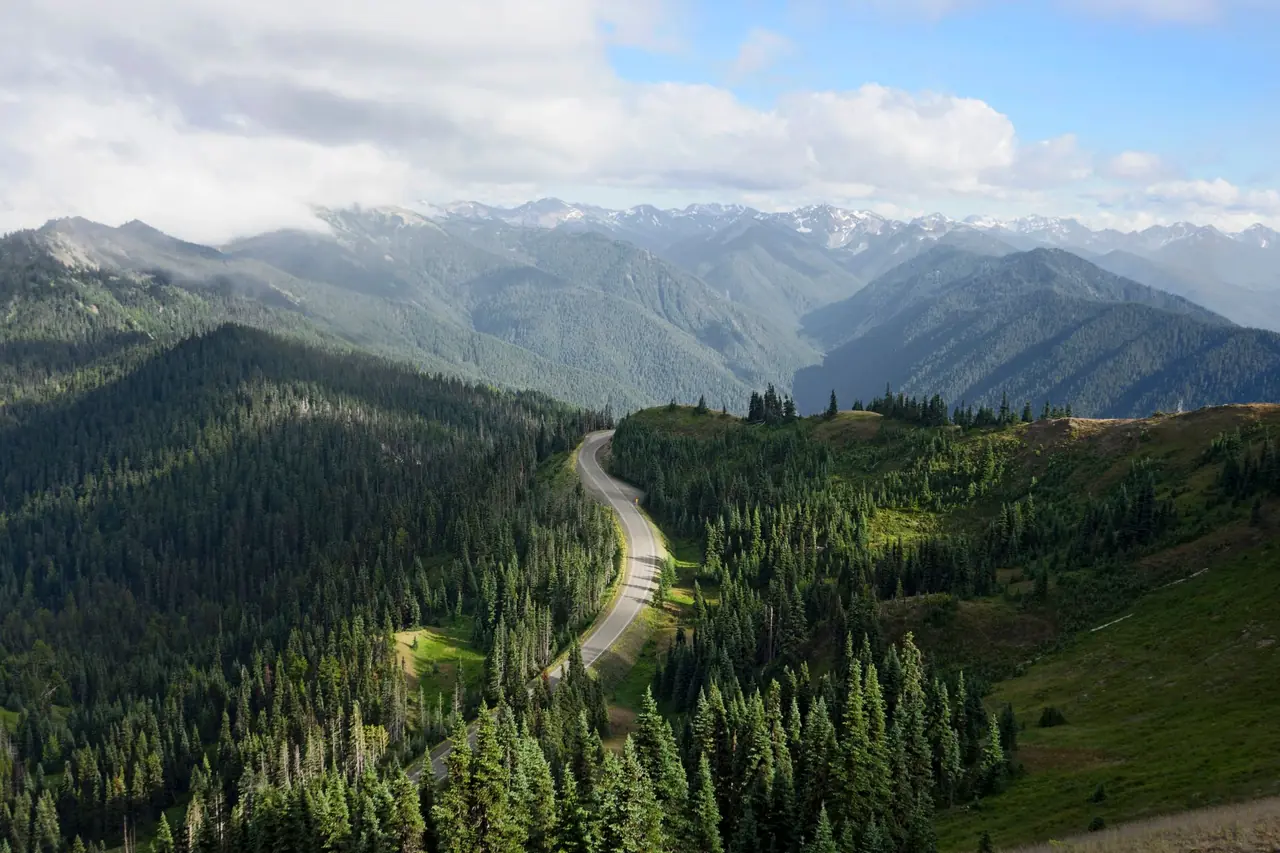
Heart O' the Hills is in forest along Hurricane Ridge Road just inside the park boundary above Port Angeles, the closest campground to the ridge. It makes an easy base for sunrise at the top, Hurricane Hill and the meadow trails. Access to the ridge itself has been limited at times since the 2023 fire that destroyed the Hurricane Ridge Day Lodge, and the road has seasonal and weather-related closures, so check road status before planning a ridge day.
Deer Park is a small, primitive, tent-only campground high on Blue Mountain, reached by a long, steep, narrow gravel road that isn't suitable for RVs or trailers. It's open only in summer and is one of the few places in the park to camp near the subalpine zone without backpacking.
East side: Staircase and beyond
Staircase, at the head of Lake Cushman in the park's southeast corner, sits beside the North Fork Skokomish River among big, moss-covered trees. It's usually quieter than the north and west campgrounds and is the closest park campground to the Seattle and Olympia areas. The east-side valleys, including the Dosewallips, have had road washouts that turned former drive-in campgrounds into walk-in sites, so check access before going.
Olympic National Forest campgrounds along Hood Canal and the Highway 101 corridor are a good overflow option on this side.
Wilderness permits and food storage
Every overnight in Olympic's wilderness requires a wilderness permit. The park uses a reservation system on Recreation.gov, with overnight quotas in heavily used areas, which include parts of the coast and popular high-country destinations. Some permits may be available closer to your date, but summer weekends in quota areas fill early.
- Food storage: Bear canisters are required on the coast and in some other areas; elsewhere, use canisters or the park's approved methods. Check the specific rules for your route on nps.gov/olym.
- Campsites: Use established sites, and camp only in designated sites where the park requires them.
- Fires: Many wilderness areas, especially above certain elevations, prohibit campfires. Carry a stove.
- Trip planning: Leave a detailed itinerary with someone at home. Cell service is unreliable through most of the park; read what to do if you get lost in the woods before any solo trip.
Shopping for a canister? Look for one on the park's approved list, such as the hard-sided models in this bear canister search, and pack it with a few days of food before your trip to make sure everything fits.
Rain, cold and what to pack
Olympic is one of the wettest places in the continental United States, and even summer brings coastal fog, drizzle and the occasional soaking. Summer nights in the campgrounds are cool, often in the 40s and 50s °F (5–15 °C), and colder at Deer Park and on the coast in fog.
- A real waterproof shell and rain pants, not a windbreaker. A waterproof hiking rain jacket earns its weight here.
- Synthetic insulation or a down jacket kept in a dry bag. Cotton stays wet for days.
- A tent with a full-coverage rainfly and good ventilation to manage condensation.
- A camp tarp for cooking and hanging out when it rains.
- Waterproof boots or quick-drying shoes plus spare socks; coastal hikes involve wet sand, creek crossings and slick logs.
- A sleeping bag rated for the low 30s °F (around 0 °C) for shoulder seasons; the Sleeping Bag & Pad Temperature Guide helps match a bag and pad to your forecast.
- Dry tinder and a backup fire starter if you plan a campfire; see how to start a fire with wet wood.
When to camp in Olympic
- July to mid-September: Driest, mildest and busiest. High country is snow-free, coast camping is most comfortable, and campgrounds fill. Reserve early or arrive at first-come campgrounds in the morning.
- June and late September to October: Fewer people, more rain. Snow lingers on high trails into early summer. Some campgrounds close after Labor Day or in October.
- November to April: The rainy season at low elevations and snow up high. A few campgrounds stay open; storms can close roads. Good for solitude if you're equipped for wet cold (see cold-weather camping).
Compare monthly averages on our August and September weather pages, and build a trip-specific gear list with the Packing List Generator. If you're flying in and don't want to haul gear, see renting camp gear for national park trips.
Frequently asked questions
Do you need reservations to camp in Olympic National Park?
Some campgrounds take reservations on Recreation.gov during the summer season and others are first-come, first-served, and the mix has changed in recent years. Check each campground's page on nps.gov/olym. In July and August, reserved sites sell out and first-come campgrounds can fill by midday.
Can you camp on the beach in Olympic National Park?
Yes, on the wilderness coast, with a wilderness permit. Beach camping is allowed only on the wilderness coast, not at every beach along the highway, so check the park's coastal map. Coastal campers must store food, trash and scented items in a park-approved bear canister and plan every headland crossing with a tide table.
What is the best campground in Olympic National Park?
It depends on the region: Kalaloch for an ocean-bluff campsite, Hoh for the rain forest, Sol Duc for the hot springs and Sol Duc Falls, Fairholme for Lake Crescent, and Heart O' the Hills for Hurricane Ridge. Pick the region you most want to explore, because driving between them takes hours.
When is the best time to camp in Olympic National Park?
July through September is the driest and most reliable period, and the only time the high country is reliably snow-free. Late spring and early fall are quieter but wetter, and some campgrounds close for winter.
Do you need a bear canister in Olympic National Park?
On the wilderness coast, park rules require food, garbage and scented items to be stored in a park-approved bear canister, and canisters are also required in some other wilderness areas. Raccoons and other animals are as big a problem as bears on the coast. Check nps.gov/olym for the current food storage rules for your route.